Analog to Digital Conversion: Definition, Process, Types, and Applications
Analog to digital conversion is a fundamental process in modern electronics and digital communication systems. It enables computers, smartphones, digital cameras, and other electronic devices to process real-world information by converting continuous analog signals into digital data. Since most natural phenomena, such as sound, temperature, light, and pressure, are analog in nature, converting these signals into digital form is essential for storing, processing, transmitting, and analyzing information. Analog to digital conversion is commonly performed using an electronic component called an Analog-to-Digital Converter (ADC). This device transforms continuous electrical signals into discrete numerical values that digital systems can understand.
In this article, we will explore the definition of analog to digital conversion, how it works, its main stages, different conversion techniques, and its applications in modern technology.
What Is Analog to Digital Conversion?
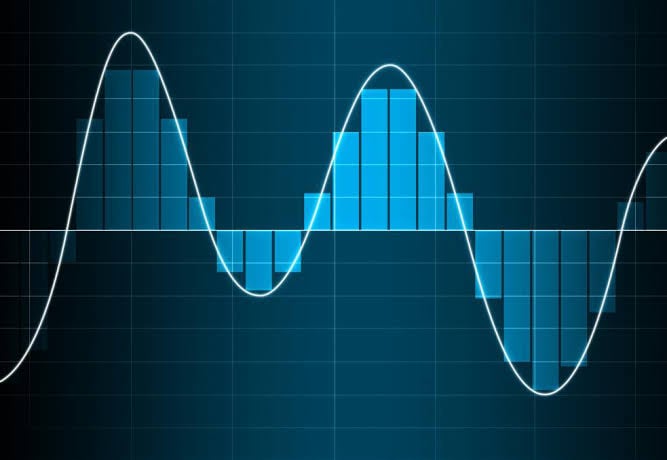
Analog to digital conversion (ADC) is the process of transforming a continuous analog signal into a digital representation consisting of discrete numerical values. It allows digital devices to receive and process information from the physical world. An analog signal varies continuously over time and can have an unlimited number of possible amplitude values within a given range. In contrast, a digital signal represents information using a finite set of discrete values, typically encoded in binary form using zeros and ones.
For example, a microphone captures sound waves and converts them into an electrical analog signal. An ADC then samples the signal, quantizes its amplitude, and encodes the resulting values into binary numbers. These digital values can subsequently be stored, edited, transmitted, or processed by a computer.
The device responsible for this conversion is known as an Analog-to-Digital Converter (ADC).
How Does It Work?
Analog to digital conversion generally involves three main stages: sampling, quantization, and encoding. Each stage plays an important role in transforming a continuous signal into digital data.
1. Sampling
Sampling is the process of measuring the amplitude of an analog signal at regular time intervals. Instead of processing every point of a continuous waveform, the ADC takes individual measurements at specific moments.
The number of samples collected per second is called the sampling rate or sampling frequency. It is measured in samples per second (SPS) or hertz (Hz).
According to the Nyquist-Shannon sampling theorem, the sampling frequency must be at least twice the highest frequency component of the input signal to reconstruct a properly band-limited signal without aliasing.
For example, human hearing generally covers frequencies up to approximately 20 kHz. Therefore, digital audio systems commonly use a sampling rate of 44.1 kHz or 48 kHz.
A higher sampling rate captures more information about changes in the analog waveform, although it also increases the amount of digital data generated.
2. Quantization
Quantization is the process of assigning each sampled amplitude to one of a limited number of discrete levels.
An analog signal can have infinitely many possible amplitude values, but a digital system can represent only a finite number of levels. Quantization reduces the continuous amplitude range into discrete steps.
The number of available quantization levels depends on the ADC’s bit resolution.
The following formula calculates the number of quantization levels:
Where:
-
\(L\) is the number of quantization levels.
-
\(N\) is the number of bits used by the ADC.
For example:
| ADC resolution | Quantization levels |
|---|---|
| 8-bit | 256 |
| 10-bit | 1,024 |
| 12-bit | 4,096 |
| 16-bit | 65,536 |
| 24-bit | 16,777,216 |
A higher bit resolution provides more quantization levels, allowing the ADC to represent the input signal more accurately.
However, quantization introduces a small difference between the original sampled value and its represented digital level. This difference is called quantization error or quantization noise.
3. Encoding
Encoding is the final stage of analog to digital conversion. It converts the quantized values into binary numbers that digital devices can understand.
Each quantization level is assigned a corresponding binary code based on the ADC’s resolution.
For example, an 8-bit ADC uses binary values ranging from 00000000 to 11111111, representing 256 possible levels.
Once encoding is complete, the analog signal has been converted into a digital data stream that can be stored, processed, or transmitted by digital systems.
Types of Analog to Digital Converters
Different ADC architectures are designed to meet specific requirements for conversion speed, accuracy, power consumption, and cost. The following are some of the most commonly used types of analog to digital converters.
1. Flash ADC
A Flash ADC, also known as a parallel ADC, is one of the fastest types of analog to digital converters. It uses multiple comparators operating simultaneously to compare the input voltage against predefined reference levels.
The comparator outputs are then processed by an encoder to generate the corresponding digital value.
Advantages:
-
Extremely fast conversion speed.
-
Suitable for high-frequency applications.
-
Low conversion latency.
Disadvantages:
-
Requires a large number of comparators.
-
Consumes relatively high power.
-
Becomes expensive at higher resolutions.
Flash ADCs are commonly used in radar systems, high-speed oscilloscopes, and video processing equipment.
2. Successive Approximation Register (SAR) ADC
A Successive Approximation Register ADC uses a binary search process to determine the digital representation of an analog input signal.
It starts by testing the most significant bit (MSB) and progressively determines the remaining bits until the final digital value is obtained.
SAR ADCs provide a good balance between conversion speed, accuracy, power consumption, and cost.
Advantages:
-
Good conversion speed.
-
Relatively low power consumption.
-
Suitable for medium- to high-resolution applications.
-
Simple integration into embedded systems.
Disadvantages:
-
Slower than Flash ADCs.
-
Requires a stable input during conversion.
-
Performance depends on internal circuit design.
SAR ADCs are widely used in microcontrollers, industrial automation, battery-powered devices, and data acquisition systems.
3. Sigma-Delta ADC
A Sigma-Delta ADC uses oversampling, noise shaping, and digital filtering to achieve high-resolution analog to digital conversion.
It samples the input signal at a frequency much higher than the required output sampling rate. A digital filter then processes the resulting data to produce high-resolution digital values.
Advantages:
-
High resolution and accuracy.
-
Excellent noise performance within the intended signal bandwidth.
-
Effective for low-frequency and precision measurements.
Disadvantages:
-
Higher processing latency.
-
Generally unsuitable for extremely high-speed applications.
-
Requires digital filtering and decimation.
Sigma-Delta ADCs are commonly used in digital audio equipment, precision measurement instruments, and medical devices.
4. Dual-Slope ADC
A Dual-Slope ADC is an integrating converter that measures an input voltage by integrating it over a fixed period and then determining how long it takes for the integrator output to return to a reference level.
This conversion method provides excellent noise rejection, particularly against power-line interference.
Advantages:
-
High accuracy and stability.
-
Excellent noise rejection.
-
Relatively simple architecture.
Disadvantages:
-
Slow conversion speed.
-
Not suitable for rapidly changing signals.
-
Requires integration and timing circuitry.
Dual-Slope ADCs are frequently used in digital multimeters and precision measurement equipment.
Applications of Analog to Digital Conversion
Analog to digital conversion is used in almost every modern electronic system that interacts with physical signals. It enables digital devices to collect information from their surroundings and perform advanced processing.
1. Digital Audio Recording
Microphones convert sound waves into analog electrical signals. ADCs transform these signals into digital audio samples that can be recorded, edited, compressed, and played back by digital devices.
Digital audio formats such as WAV, FLAC, and MP3 rely on digital representations of sound.
2. Digital Cameras
Digital cameras use image sensors to convert incoming light into electrical signals. Analog-to-digital conversion transforms the sensor outputs into digital pixel information.
This information is then processed to produce digital photographs and videos.
3. Medical Equipment
Medical devices use ADCs to convert biological signals into digital data for monitoring and analysis.
Examples include:
-
Electrocardiograms (ECG) for monitoring heart activity.
-
Electroencephalograms (EEG) for measuring brain activity.
-
Digital blood pressure monitors.
-
Patient monitoring systems.
Accurate conversion is particularly important in medical applications because small signal variations may contain valuable diagnostic information.
4. Industrial Automation
Industrial systems use sensors to measure temperature, pressure, humidity, vibration, and other physical conditions.
ADCs convert sensor outputs into digital data that programmable logic controllers (PLCs), industrial computers, and monitoring systems can process.
This enables automated control, equipment monitoring, and predictive maintenance.
5. Communication Systems
Analog to digital conversion plays an important role in digital communication systems.
For example, ADCs convert received analog signals into digital samples for further processing, filtering, decoding, and signal analysis.
They are widely used in wireless communication equipment, software-defined radios, and digital receivers.
6. Internet of Things (IoT)
IoT devices frequently use sensors to collect environmental information. ADCs convert analog sensor outputs into digital values that microcontrollers and embedded processors can analyze.
Examples include smart thermostats, environmental monitoring devices, smart agriculture systems, and wearable electronics.
Advantages of Analog to Digital Conversion
Analog to digital conversion provides several benefits that make digital technology practical and efficient.
-
Easy data processing: Digital signals can be processed using computers, microcontrollers, and digital signal processors.
-
Reliable data storage: Digital information can be stored and retrieved without the gradual degradation associated with analog storage.
-
Noise resistance: Digital systems can use error detection, correction, and regeneration techniques to improve data reliability.
-
Easy transmission: Digital data can be transmitted through modern communication networks and communication interfaces.
-
Data compression: Digital information can be compressed to reduce storage requirements and transmission bandwidth.
-
Flexible signal processing: Digital signals can be filtered, modified, analyzed, and transformed using software.
Some Disadvantages
Despite its advantages, analog to digital conversion also has some limitations.
-
Quantization error: Converting continuous amplitudes into discrete levels introduces quantization error.
-
Sampling limitations: An insufficient sampling rate can cause aliasing and loss of signal information.
-
Hardware requirements: ADCs require additional electronic components and supporting circuitry.
-
Power consumption: High-speed and high-resolution converters may consume considerable power.
-
Conversion latency: Some ADC architectures introduce delays that may affect real-time applications.
-
Limited resolution: Every ADC has a finite resolution, which limits how precisely it can represent an analog signal.
Difference Between Analog and Digital Signals
Understanding the differences between analog and digital signals helps explain why analog to digital conversion is necessary.
| Feature | Analog Signal | Digital Signal |
|---|---|---|
| Nature | Continuous | Discrete |
| Amplitude | Unlimited possible values within a range | Finite quantized levels |
| Representation | Continuous waveform | Binary data |
| Noise sensitivity | Generally more susceptible to accumulated noise | Can use regeneration and error correction |
| Processing | Analog electronic circuits | Digital processors and software |
| Storage | Analog recording media | Digital storage devices |
| Examples | Microphone output, temperature sensor voltage | MP3 audio, digital images, computer data |
Analog to Digital Conversion vs. Digital to Analog Conversion
Analog to digital conversion and digital to analog conversion are complementary processes used in electronic systems.
An ADC converts an analog signal into digital data, while a Digital-to-Analog Converter (DAC) performs the reverse operation by transforming digital values into an analog electrical signal.
| Feature | ADC | DAC |
|---|---|---|
| Full name | Analog-to-Digital Converter | Digital-to-Analog Converter |
| Conversion direction | Analog to digital | Digital to analog |
| Input | Analog signal | Digital data |
| Output | Digital values | Analog signal |
| Main purpose | Capture real-world signals for digital processing | Reproduce analog signals from digital data |
| Applications | Digital recording, sensors, measurement systems | Audio playback, displays, signal generation |
For example, when recording music, an ADC converts microphone signals into digital audio data. When playing the recorded music through speakers, a DAC converts the digital audio data back into an analog signal that can drive the audio output system.
Conclusion
Analog to digital conversion is an essential technology that connects the analog physical world with modern digital systems. By using sampling, quantization, and encoding, an Analog-to-Digital Converter transforms continuous signals into discrete digital information that computers and electronic devices can process. Different ADC architectures, including Flash, SAR, Sigma-Delta, and Dual-Slope converters, offer different combinations of speed, accuracy, resolution, and power efficiency.
From digital audio recording and medical equipment to industrial automation and IoT devices, analog to digital conversion remains a fundamental part of modern electronics, communication systems, and data processing technologies.