Enterprise Networking: Architecture, Key Components, and Best Practices
Enterprise networking is the backbone of modern business operations. It connects users, devices, applications, and data securely across offices, data centers, and cloud environments. As organizations scale digitally, investing in a reliable and high-performance enterprise network becomes essential for productivity, security, and business continuity. In this guide, we will explore what enterprise networking is, how it works, its core components, and best practices for building a future-ready infrastructure.
What Is Enterprise Networking?
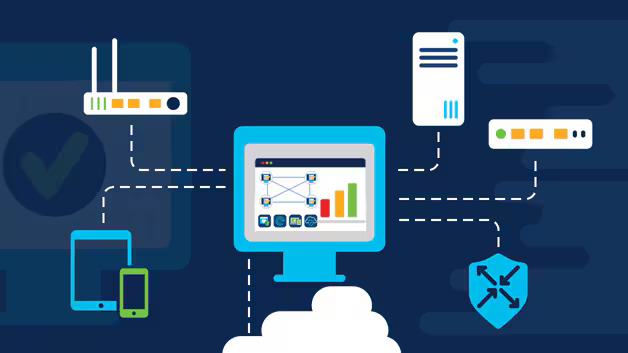
Enterprise networking refers to the technology, hardware, software, and services used to connect and manage communication across a business environment. It includes LANs, WANs, data center networks, wireless networks, cyber security controls, and cloud connectivity.
Primary goals of enterprise networking include:
- Ensuring secure communication
- Providing high network performance
- Enabling centralized management and automation
- Supporting scalability and digital transformation
- Allowing seamless access from anywhere
Key Components
An enterprise network consists of multiple integrated systems:
- Local Area Network (LAN) – Connects devices within a limited location, such as an office or building, using switches and Ethernet.
- Wide Area Network (WAN) – Links multiple branch offices, factories, and remote sites. Technologies include: MPLS, SD-WAN, VPN over the public internet
- Data Center and Cloud Networking – Connects workloads hosted in: On-premises data centers, Public cloud (AWS, Azure, GCP), Hybrid and multicloud environments
- Wireless Networking (Wi-Fi) – Supports mobile access through: Wi-Fi 6/6E, Wireless controllers, WLAN security policies
- Security Architecture – Adopts Zero Trust, secure access, and threat protection solutions: Firewalls, Network Access Control (NAC), IPS/IDS, SASE/SSE, Encryption and identity-based policies
- Network Management and Automation – Uses tools for: Monitoring & troubleshooting, Configuration automation, AIOps and analytics
Enterprise Networking Architecture Models
| Architecture | Description | Benefits |
|---|---|---|
| Traditional On-Prem | Fully hosted inside corporate facilities | Control & custom security |
| Cloud-First | The majority of workloads in cloud platforms | Elasticity & cost optimization |
| Hybrid & Multicloud | Mix of data center + cloud | Flexibility & performance |
| Software-Defined | Abstracts control from hardware (SDN/SD-WAN) | Centralized control & agility |
Modern Trends in Enterprise Networking
| Trend | Business Outcomes |
|---|---|
| Zero Trust Security | Reduces breach risk and insider threats |
| SD-WAN | Lower WAN cost & better cloud performance |
| AI-driven Networking | Automated fault detection and optimization |
| Edge Computing | Low latency for IoT and real-time applications |
| Wi-Fi 6/7 | Higher capacity for dense device environments |
Security in Enterprise Networking
Security must be integrated into every layer of the network:
- Multi-factor authentication (MFA)
- Secure segmentation / micro-segmentation
- Continuous traffic inspection
- Least-privilege network access
- Regular patching and vulnerability scanning
SASE (Secure Access Service Edge) is increasingly adopted to unify:
- Network security
- Cloud access
- Remote user protection
Best Practices for a Future-Ready Enterprise Network
- Adopt a cloud-aligned network strategy
- Implement Zero Trust and strong endpoint security
- Leverage SD-WAN for branch connectivity
- Automate network operations with AIOps
- Design for scalability and high availability
- Monitor continuously with actionable analytics
- Regularly audit performance and security posture
Conclusion
Enterprise networking plays a critical role in enabling digital transformation, secure collaboration, and business agility. By adopting modern architecture—including security-first design, automation, software-defined technologies, and cloud integration – organizations can future-proof their IT infrastructure and stay competitive in a rapidly evolving digital landscape.