High Bandwidth Memory (HBM): The Future of High-Performance Computing
As artificial intelligence (AI), machine learning, cloud computing, and data-intensive applications continue to evolve, traditional memory technologies are struggling to keep pace with increasing performance demands. This challenge has led to the development of High Bandwidth Memory (HBM), an advanced memory architecture designed to deliver significantly higher bandwidth while consuming less power than conventional memory solutions. High Bandwidth Memory has become a critical component in modern GPUs, AI accelerators, supercomputers, and data centers, enabling faster data processing and improved system efficiency.
In this article, we’ll explore what High Bandwidth Memory is, how it works, its advantages, applications, and future developments.
What Is High Bandwidth Memory?
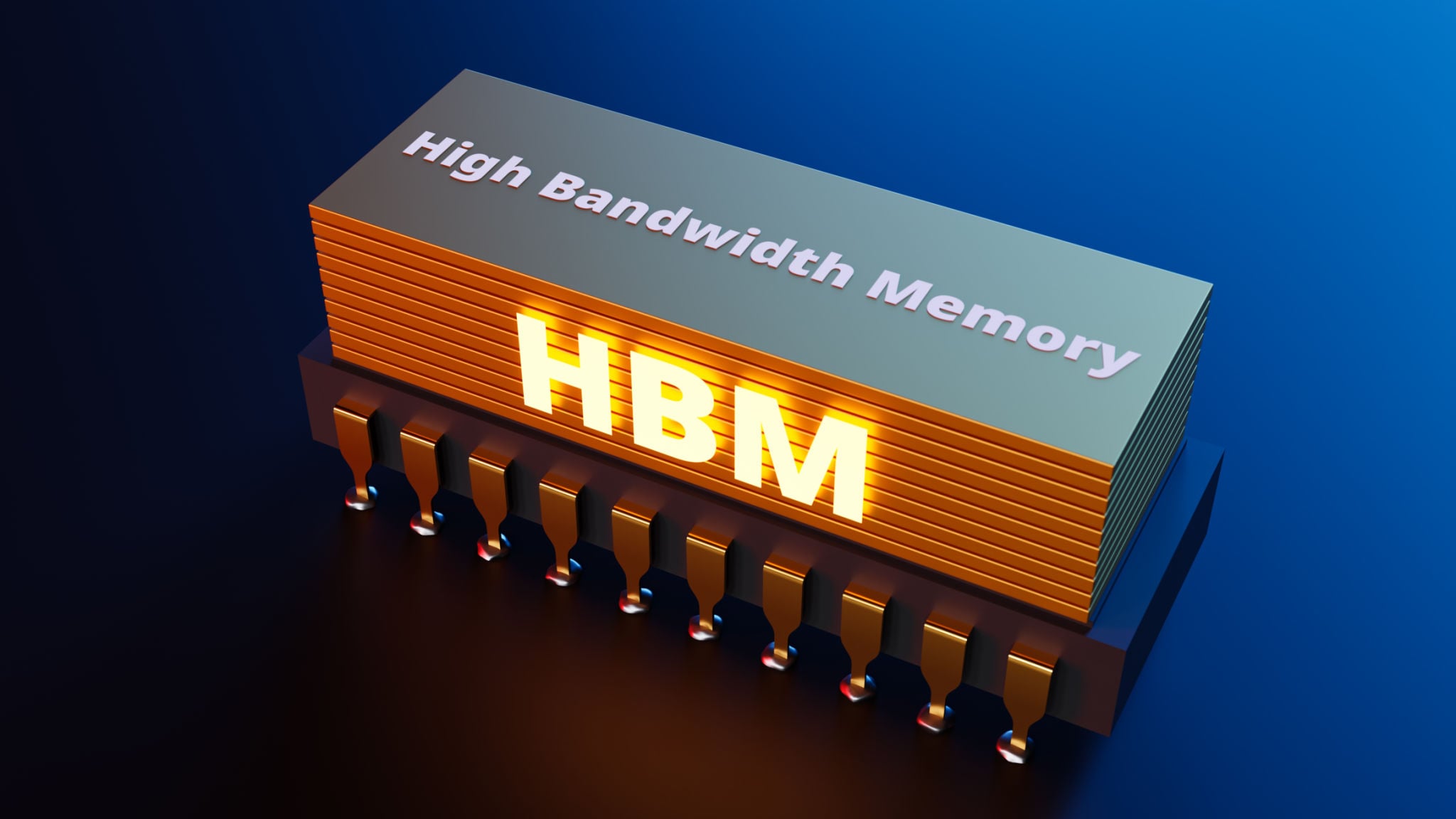
High Bandwidth Memory (HBM) is a high-performance RAM technology that uses vertically stacked memory chips connected through Through-Silicon Vias (TSVs) and integrated with processors using advanced packaging techniques.
Unlike traditional memory modules that are placed separately on a motherboard, HBM is positioned extremely close to the processor, reducing latency and dramatically increasing data transfer rates.
Key Characteristics of HBM
- Extremely high memory bandwidth
- Lower power consumption
- Compact physical footprint
- 3D-stacked memory architecture
- Wide memory interface
- Optimized for data-intensive workloads
How High Bandwidth Memory Works
HBM achieves superior performance through a unique design approach.
1. 3D Memory Stacking
Multiple DRAM dies are stacked vertically, creating a compact memory package.
Benefits include:
- Reduced signal travel distance
- Increased data transfer efficiency
- Smaller physical space requirements
2. Through-Silicon Vias (TSVs)
TSVs are microscopic vertical connections that pass through silicon dies.
These connections allow:
- Fast communication between memory layers
- Reduced latency
- Increased bandwidth
3. Wide Memory Bus
Traditional memory technologies often use narrow memory channels operating at high frequencies.
HBM uses:
- Thousands of data lines simultaneously
- Lower clock speeds
- Massive aggregate bandwidth
This design provides higher throughput while reducing power consumption.
Evolution of High Bandwidth Memory
HBM1
Introduced in 2015, HBM1 represented the first commercial generation.
Features:
- Up to 128 GB/s bandwidth per stack
- Lower power usage than GDDR5
- Primarily used in early high-performance GPUs
HBM2
HBM2 improved capacity and bandwidth significantly.
Enhancements included:
- Up to 256 GB/s per stack
- Higher storage density
- Increased reliability
HBM2E
HBM2E further expanded performance.
Capabilities:
- Up to 460 GB/s per stack
- Larger memory capacities
- Better support for AI workloads
HBM3
HBM3 became a major advancement for AI and HPC systems.
Benefits:
- More than 800 GB/s per stack
- Improved energy efficiency
- Enhanced scalability
HBM3E
HBM3E delivers even higher performance and is widely adopted in modern AI accelerators.
Features:
- Over 1 TB/s bandwidth per stack
- Optimized for generative AI
- Higher capacities and improved thermal management
Some Advantages
Exceptional Bandwidth
HBM offers significantly higher bandwidth than traditional memory technologies such as DDR and GDDR.
This enables:
- Faster data movement
- Reduced bottlenecks
- Improved application performance
Lower Power Consumption
HBM uses shorter interconnects and lower operating frequencies, resulting in greater energy efficiency.
Benefits include:
- Reduced operating costs
- Lower heat generation
- Better performance-per-watt
Compact Design
The vertical stacking architecture saves valuable board space.
This is particularly important for:
- GPUs
- AI accelerators
- Embedded systems
Improved Scalability
Modern HBM generations can support increasingly large datasets and demanding workloads.
High Bandwidth Memory vs Traditional Memory
| Feature | HBM | DDR Memory | GDDR Memory |
|---|---|---|---|
| Bandwidth | Very High | Moderate | High |
| Power Efficiency | Excellent | Good | Moderate |
| Physical Size | Compact | Larger | Larger |
| Latency | Low | Moderate | Low |
| Cost | Higher | Lower | Moderate |
| Primary Use | AI, HPC, GPUs | General Computing | Graphics Processing |
HBM excels in environments where bandwidth is the primary performance constraint.
Applications of High Bandwidth Memory
Artificial Intelligence
AI training and inference workloads process enormous datasets.
HBM supports:
- Deep learning models
- Neural network training
- Large language models (LLMs)
- Generative AI systems
High-Performance Computing (HPC)
Supercomputers rely on HBM for scientific simulations and complex calculations.
Common uses include:
- Climate modeling
- Genomic analysis
- Physics simulations
- Engineering research
Graphics Processing Units (GPUs)
Modern GPUs use HBM to manage large volumes of graphical and computational data.
Advantages include:
- Faster rendering
- Better gaming performance
- Enhanced professional visualization
Data Centers
Cloud service providers deploy HBM-equipped accelerators to improve workload efficiency.
Benefits include:
- Faster analytics
- Improved virtualization
- Better AI infrastructure performance
Networking Equipment
High-speed networking devices use HBM to process large data streams efficiently.
Applications include:
- Network switches
- Routers
- Telecommunications systems
Challenges of High Bandwidth Memory
Despite its benefits, HBM faces several challenges.
- Higher Manufacturing Costs – Advanced packaging technologies increase production complexity and cost.
- Thermal Management – Stacked memory structures generate concentrated heat that must be effectively dissipated.
- Limited Capacity Compared to Some Alternatives – While capacity continues to improve, some large-scale applications may still require additional memory solutions.
- Complex Integration – HBM requires specialized packaging and design expertise, making implementation more challenging.
Future of High Bandwidth Memory
The demand for AI, machine learning, and data-intensive computing continues to grow rapidly, making HBM increasingly important.
Future trends include:
- Higher memory capacities
- Increased bandwidth beyond HBM3E
- Improved energy efficiency
- Enhanced 3D packaging technologies
- Greater adoption of AI infrastructure
- Integration with next-generation processors
As AI models become larger and more sophisticated, HBM is expected to play a central role in enabling future computing breakthroughs.
Best Practices for Organizations Considering HBM
To maximize the benefits of High Bandwidth Memory:
- Identify bandwidth-intensive workloads.
- Evaluate performance bottlenecks.
- Consider the total cost of ownership.
- Assess cooling and thermal requirements.
- Select hardware optimized for HBM integration.
- Plan for future scalability.
A strategic deployment approach helps organizations achieve the best return on investment.
Conclusion
High Bandwidth Memory (HBM) is transforming modern computing by providing exceptional bandwidth, improved energy efficiency, and compact system design. Through innovative technologies such as 3D stacking and Through-Silicon Vias, HBM enables the performance required for AI, machine learning, high-performance computing, and advanced graphics applications.
As data volumes continue to expand and computational workloads become more demanding, High Bandwidth Memory will remain a foundational technology driving the next generation of computing innovation.