Optical Transport Network (OTN): Architecture, Benefits, Protocols, and Real-World Applications
As global internet traffic continues to surge due to cloud computing, AI, streaming, and 5G, service providers require transport technologies capable of delivering massive bandwidth while maintaining exceptional reliability. One of the most important technologies enabling this evolution is the Optical Transport Network (OTN). OTN provides a standardized framework for transporting large volumes of digital traffic over optical fiber while offering carrier-grade management, monitoring, error correction, and multiplexing capabilities. It combines the high capacity of DWDM systems with the operational reliability traditionally associated with SONET and SDH.
This comprehensive guide explains everything you need to know about Optical Transport Networks, including their architecture, protocols, advantages, applications, and future role in modern telecommunications.
What Is an Optical Transport Network?
An Optical Transport Network (OTN) is a set of standards defined by the ITU-T (International Telecommunication Union) that enables efficient transport, multiplexing, switching, monitoring, and management of digital signals across optical fiber networks.
Unlike simple optical transmission systems, OTN provides a digital wrapper around client signals, allowing carriers to transport various services – including Ethernet, Fibre Channel, SONET/SDH, IP, and storage traffic – over a common optical infrastructure.
OTN is often described as the digital backbone of modern optical communication networks.
Why Was OTN Developed?
Earlier transport technologies such as SONET and SDH were designed primarily for TDM (Time Division Multiplexing) traffic.
Modern networks now carry:
- High-speed Ethernet
- Cloud workloads
- Data center traffic
- Video streaming
- AI applications
- 5G backhaul
- Storage replication
These applications require:
- Much higher bandwidth
- Flexible multiplexing
- Better error correction
- Improved network management
- Multi-service support
OTN was developed to meet these new requirements.
How Does It Work?
OTN encapsulates client traffic inside standardized transport frames before transmitting it over optical wavelengths.
The basic process includes:
- Client signal enters the OTN device.
- Client data is mapped into an Optical Data Unit (ODU).
- Overhead information is added.
- Forward Error Correction (FEC) is applied.
- Data is wrapped into an Optical Transport Unit (OTU).
- OTU signals are transmitted through DWDM wavelengths.
- The receiving device removes overhead and restores the original client signal.
This digital wrapper enables robust monitoring and error correction throughout the transport path.
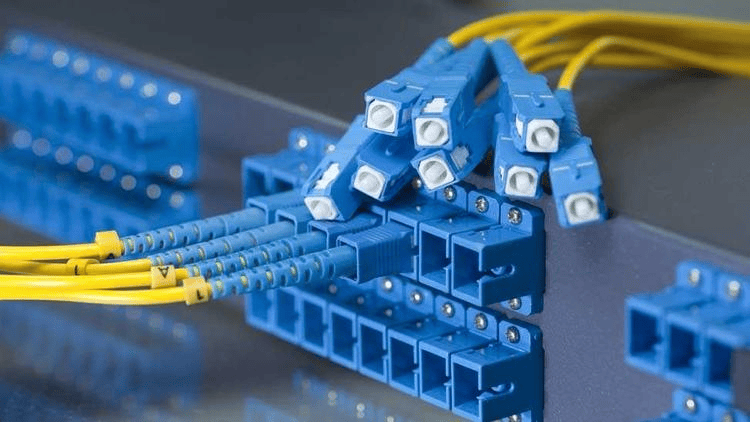
OTN Layers Explained
Optical Payload Unit (OPU)
The OPU maps client signals into the OTN payload. It adapts different client protocols into a standardized transport format.
Optical Data Unit (ODU)
The ODU provides:
- End-to-end path monitoring
- Performance measurement
- Connection management
- Switching functions
ODU acts similarly to a virtual circuit within the OTN.
Optical Transport Unit (OTU)
The OTU includes:
- ODU payload
- Transport overhead
- Forward Error Correction
This is the complete signal transmitted across the optical network.
OTN Data Rates
Common standardized OTN rates include:
| OTN Signal | Approximate Line Rate |
|---|---|
| OTU1 | 2.7 Gbps |
| OTU2 | 10.7 Gbps |
| OTU2e | 11.1 Gbps |
| OTU3 | 43 Gbps |
| OTU4 | 112 Gbps |
| OTUCn | 100G multiples |
Modern implementations commonly support:
- 100G
- 200G
- 400G
- 800G
- Multi-terabit transport
Key Features of Optical Transport Network
Multi-Service Transport
OTN supports numerous client protocols:
- Ethernet
- Fibre Channel
- SDH
- SONET
- IP/MPLS
- CPRI
- eCPRI
Forward Error Correction
Built-in FEC greatly improves transmission quality.
Advantages include:
- Longer fiber reach
- Lower error rates
- Better optical margins
Carrier-Grade Reliability
OTN offers:
- Fault monitoring
- Protection switching
- Service management
- Performance monitoring
Efficient Multiplexing
Multiple lower-speed signals can be combined into higher-capacity optical channels.
Scalability
OTN scales from:
- 1G
- 10G
- 40G
- 100G
- 400G
- 800G
- Beyond 1 Tbps
Benefits of Optical Transport Network
Massive Bandwidth
OTN efficiently transports terabits of traffic over a single fiber pair.
Excellent Reliability
Carrier-grade monitoring ensures high service availability.
Reduced Operational Costs
By consolidating multiple services onto one infrastructure, operators reduce:
- Equipment costs
- Power consumption
- Maintenance expenses
Better Network Visibility
Comprehensive monitoring allows operators to detect faults before service degradation occurs.
Protocol Independence
OTN transports virtually any client protocol without modification.
OTN vs SONET/SDH
| Feature | OTN | SONET/SDH |
|---|---|---|
| Bandwidth | Very High | Limited |
| Ethernet Support | Native | Limited |
| Error Correction | Built-in FEC | Minimal |
| Scalability | Excellent | Moderate |
| Multi-Service Support | Yes | Primarily TDM |
| DWDM Integration | Native | Limited |
OTN has largely replaced SONET and SDH for modern backbone deployments.
OTN vs Ethernet
| Feature | OTN | Ethernet |
|---|---|---|
| Layer | Transport | Data Link |
| Error Correction | Yes | Limited |
| Performance Monitoring | Extensive | Basic |
| Carrier Features | Advanced | Moderate |
| Long-Haul Transport | Excellent | Limited |
Ethernet often serves as client traffic transported over OTN.
OTN and DWDM
OTN and DWDM work together rather than competing.
DWDM provides:
- Multiple wavelengths
- High fiber capacity
- Optical multiplexing
OTN provides:
- Digital framing
- Error correction
- Traffic management
- Service monitoring
Together, they form modern optical backbone networks.
OTN Switching
OTN switches operate at the ODU level.
Advantages include:
- Efficient traffic grooming
- Dynamic bandwidth allocation
- Service restoration
- Reduced network complexity
OTN switching minimizes unnecessary optical-electrical-optical (OEO) conversions.
OTN Protection Mechanisms
Carrier-grade resilience includes:
- 1+1 protection
- 1:1 protection
- Ring protection
- Mesh restoration
- Automatic protection switching
These mechanisms minimize service interruptions during failures.
Challenges of Optical Transport Networks
Despite numerous advantages, OTN presents several challenges.
High Initial Cost
Deploying carrier-grade optical infrastructure requires significant capital investment.
Complex Deployment
OTN planning requires expertise in:
- Optical engineering
- Wavelength planning
- Fiber design
- Capacity management
Skilled Personnel
Operating large OTN infrastructures demands specialized training.
Future of Optical Transport Network
OTN continues to evolve alongside next-generation networking technologies.
Key trends include:
- 800G optical transport
- 1.6 Tbps coherent optics
- AI-driven network automation
- Software-defined optical networking
- Open optical networking
- Flexible-grid (Flex-Grid) optical transport
- Integration with cloud-native network architectures
As bandwidth demands continue to rise, OTN will remain a critical technology for building scalable, resilient, and efficient optical backbone networks.
Best Practices for Deploying OTN
To maximize the value of an Optical Transport Network deployment:
- Plan capacity with future growth in mind.
- Use coherent optics for long-haul, high-capacity links.
- Enable Forward Error Correction (FEC) to improve transmission performance.
- Implement comprehensive monitoring and alarm management for proactive maintenance.
- Design redundant paths and protection mechanisms for high availability.
- Integrate OTN with DWDM and software-defined networking (SDN) where appropriate to simplify operations.
- Regularly review bandwidth utilization and optimize ODU switching to reduce wasted capacity.
Conclusion
The Optical Transport Network (OTN) has become the foundation of modern high-capacity optical communications. By combining standardized digital framing, powerful Forward Error Correction, comprehensive performance monitoring, and seamless integration with DWDM, OTN delivers the scalability and reliability required for today’s data-intensive applications.
Whether supporting cloud services, 5G infrastructure, enterprise connectivity, or global internet backbones, OTN enables service providers to transport diverse traffic efficiently while maintaining carrier-grade performance. As optical technologies continue to advance toward multi-terabit speeds, the Optical Transport Network will remain an essential building block for the next generation of resilient, intelligent, and high-performance networks.