Remote Procedure Call (RPC): Definition, Types, Architecture, Benefits, and Use Cases
Remote Procedure Call (RPC) is a communication protocol that allows a program to request a service from another program located on a different computer or network without understanding the network details. In simple terms, RPC enables developers to call functions or procedures on remote systems as if they were local functions. RPC has become a foundational technology in distributed systems, cloud computing, microservices, and enterprise applications. Modern technologies such as gRPC, XML-RPC, and JSON-RPC are widely used in web services, APIs, and cloud-native applications. As businesses increasingly adopt distributed architectures, understanding remote procedure call mechanisms is essential for developers, network engineers, and IT professionals.
What Is a Remote Procedure Call?
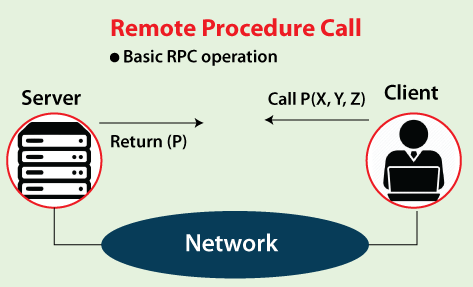
A Remote Procedure Call is a protocol that enables one software application to execute code on another machine over a network. The client application sends a request to the server, and the server processes the request before returning the result.
The primary goal of RPC is to simplify communication between distributed systems by abstracting low-level networking operations.
Simple RPC Example
A client application may request:
- User authentication
- Database queries
- File access
- Payment processing
- Cloud resource management
The client simply calls a remote function without manually handling sockets, TCP connections, or packet formatting.
How Remote Procedure Call Works
The RPC process follows several coordinated steps.
RPC Workflow
- The client invokes a procedure call.
- The client stub serializes the parameters.
- The RPC runtime transmits the request over the network.
- The server runtime receives the request.
- The server stub deserializes the parameters.
- The server procedure executes.
- The result is serialized and returned to the client.
- The client receives the response.
RPC Communication Model
f(x)=Request→Process→Responsef(x)=\text{Request} \rightarrow \text{Process} \rightarrow \text{Response}
This abstraction makes remote communication appear similar to local function execution.
Components of RPC Architecture
RPC architecture contains several critical components.
- Client – The client initiates the remote request.
- Client Stub – The client stub acts as a proxy and converts procedure parameters into a transferable format.
- RPC Runtime – The runtime manages network communication between the client and the server.
- Server Stub – The server stub receives serialized data and converts it back into usable parameters.
- Server – The server executes the requested procedure and returns the result.
Types of Remote Procedure Call
Different RPC models are designed for various application requirements.
1. Synchronous RPC
In synchronous RPC, the client waits until the server completes the request and sends a response.
Advantages
- Simple implementation
- Easier debugging
- Predictable behavior
Disadvantages
- Increased latency
- Blocking operations
2. Asynchronous RPC
The client sends the request and continues processing without waiting for an immediate response.
Advantages
- Better performance
- Improved scalability
- Reduced waiting time
Disadvantages
- More complex implementation
- Harder error handling
3. One-Way RPC
The client sends a request without expecting any response.
Common use cases include:
- Logging systems
- Monitoring tools
- Notification services
4. Callback RPC
The server sends a callback to the client after processing the request. This method is commonly used in event-driven systems.
Popular RPC Protocols
Several RPC frameworks are widely used in modern software development.
gRPC
gRPC is a high-performance open-source RPC framework developed by Google.
Features include:
- HTTP/2 support
- Protocol Buffers serialization
- Bidirectional streaming
- Strong performance
XML-RPC
XML-RPC uses XML encoding and HTTP transport for remote procedure calls.
JSON-RPC
JSON-RPC is lightweight and uses JSON formatting for communication.
SOAP RPC
SOAP-based RPC relies on XML messaging and enterprise-grade security features.
Advantages of Remote Procedure Call
RPC offers multiple benefits for distributed computing systems.
- Simplified Development – Developers can invoke remote services like local functions.
- Improved Modularity – Applications can be divided into smaller, distributed services.
- Better Scalability – RPC frameworks support scalable microservices architectures.
- Enhanced Performance – Protocols such as gRPC provide fast binary serialization and efficient communication.
- Cross-Platform Communication – RPC enables communication between applications running on different operating systems and programming languages.
Disadvantages of RPC
Despite its advantages, RPC also has limitations.
- Network Dependency – RPC relies heavily on network availability and stability.
- Latency Issues – Remote calls are slower than local function calls.
- Complex Debugging – Distributed environments can complicate troubleshooting.
- Serialization Overhead – Data encoding and decoding consume additional resources.
- Security Risks – Improperly secured RPC systems may expose sensitive services.
Remote Procedure Call vs REST API
RPC and REST are both used for distributed communication, but differ significantly.
| Feature | RPC | REST |
|---|---|---|
| Communication Style | Function calls | Resource-based |
| Performance | Typically faster | Moderate |
| Data Format | Binary or JSON/XML | Usually JSON |
| Flexibility | Procedure-oriented | Resource-oriented |
| Protocol Support | Various protocols | HTTP mainly |
| Learning Curve | Moderate | Easier |
When to Use RPC
RPC is suitable for:
- Internal microservices
- Real-time applications
- High-performance systems
- Distributed computing
When to Use REST
REST is ideal for:
- Public APIs
- Web applications
- Browser-based systems
- Simpler integrations
RPC in Microservices Architecture
Remote Procedure Call is widely used in microservices communication.
In microservices environments:
- Services communicate over the network
- APIs expose procedures
- Lightweight communication is critical
- Scalability is essential
gRPC has become especially popular for cloud-native microservices due to its speed and efficiency.
Security Considerations in RPC
Security is crucial when implementing remote procedure call systems.
- Authentication – Ensure only authorized users can access services.
- Encryption – Use TLS/SSL encryption to protect data in transit.
- Input Validation – Validate all incoming parameters to prevent attacks.
- Access Control – Restrict permissions for sensitive procedures.
- Logging and Monitoring – Monitor RPC activity for suspicious behavior.
Common Use Cases of Remote Procedure Call
RPC is used across many industries and technologies.
- Cloud Computing – Cloud platforms use RPC for resource management and orchestration.
- Distributed Databases – RPC enables database nodes to synchronize and communicate.
- IoT Systems – Internet of Things devices often rely on lightweight RPC communication.
- Enterprise Applications – Business systems use RPC for internal service integration.
- Blockchain Platforms – Blockchain nodes communicate using RPC interfaces.
- Multiplayer Games – Online gaming systems use RPC for real-time synchronization.
Best Practices for Implementing RPC
To build efficient RPC systems, organizations should follow best practices.
- Choose the Right Protocol – Select gRPC, JSON-RPC, or XML-RPC based on performance and compatibility needs.
- Minimize Payload Size – Smaller messages improve network efficiency.
- Implement Timeout Mechanisms – Timeouts prevent stalled connections.
- Use Retry Logic Carefully – Retries should avoid duplicate transactions.
- Optimize Serialization – Efficient serialization improves speed and reduces bandwidth consumption.
- Monitor Performance – Track latency, failures, and throughput continuously.
Future of Remote Procedure Call
RPC continues evolving alongside distributed computing technologies.
Emerging trends include:
- AI-driven service orchestration
- Serverless RPC communication
- Edge computing integration
- High-speed cloud-native protocols
- Zero-trust RPC security architectures
As modern applications become increasingly decentralized, RPC frameworks will remain critical for scalable system communication.
Conclusion
Remote Procedure Call is a powerful protocol that simplifies communication between distributed systems. By allowing applications to invoke remote services as local procedures, RPC improves modularity, scalability, and development efficiency. Technologies like gRPC, JSON-RPC, and XML-RPC continue to drive innovation across cloud computing, microservices, IoT, and enterprise applications. Although RPC introduces challenges such as network dependency and debugging complexity, its performance and flexibility make it indispensable in modern software architecture. Organizations adopting distributed systems should understand RPC principles, choose suitable protocols, and implement strong security practices to maximize reliability and scalability.