Virtual Node: Definition, Benefits, and How It Works in Modern IT Infrastructure
A virtual node is a core concept in distributed computing, cloud environments, container orchestration, and modern networking. As organizations scale their digital infrastructure, virtual nodes offer flexibility, efficiency, and improved resource utilization. This article explains what a virtual node is, how it works, and why it matters for cloud-native systems.
What Is a Virtual Node?
A virtual node is a logical representation of a compute resource within a distributed system. Instead of relying on a physical server, a virtual node emulates a node’s functionality—such as compute, memory, and network capabilities—without being tied to dedicated hardware.
Virtual nodes are commonly used in:
- Kubernetes (e.g., Virtual Kubelet connecting external compute providers)
- Serverless or elastic compute platforms
- Distributed storage systems
- Peer-to-peer networks
- High-performance computing clusters
By abstracting the hardware layer, virtual nodes make it easier to scale workloads, optimize resources, and integrate with multi-cloud or hybrid environments.
How Virtual Nodes Work
A virtual node operates as a lightweight proxy or logical endpoint. It communicates with external compute resources or cloud services and reports those capabilities back to the orchestration layer.
Key Functions:
- Resource Abstraction – The node appears as part of the cluster but runs workloads on external or dynamic compute resources.
- Dynamic Provisioning – Workloads are scheduled on demand, enabling elastic scaling without managing physical servers.
- Seamless Integration – Virtual nodes integrate with cloud providers, serverless functions, and container services.
- API Compatibility – They behave like traditional nodes from the perspective of the scheduler, but do not run a full node agent stack.
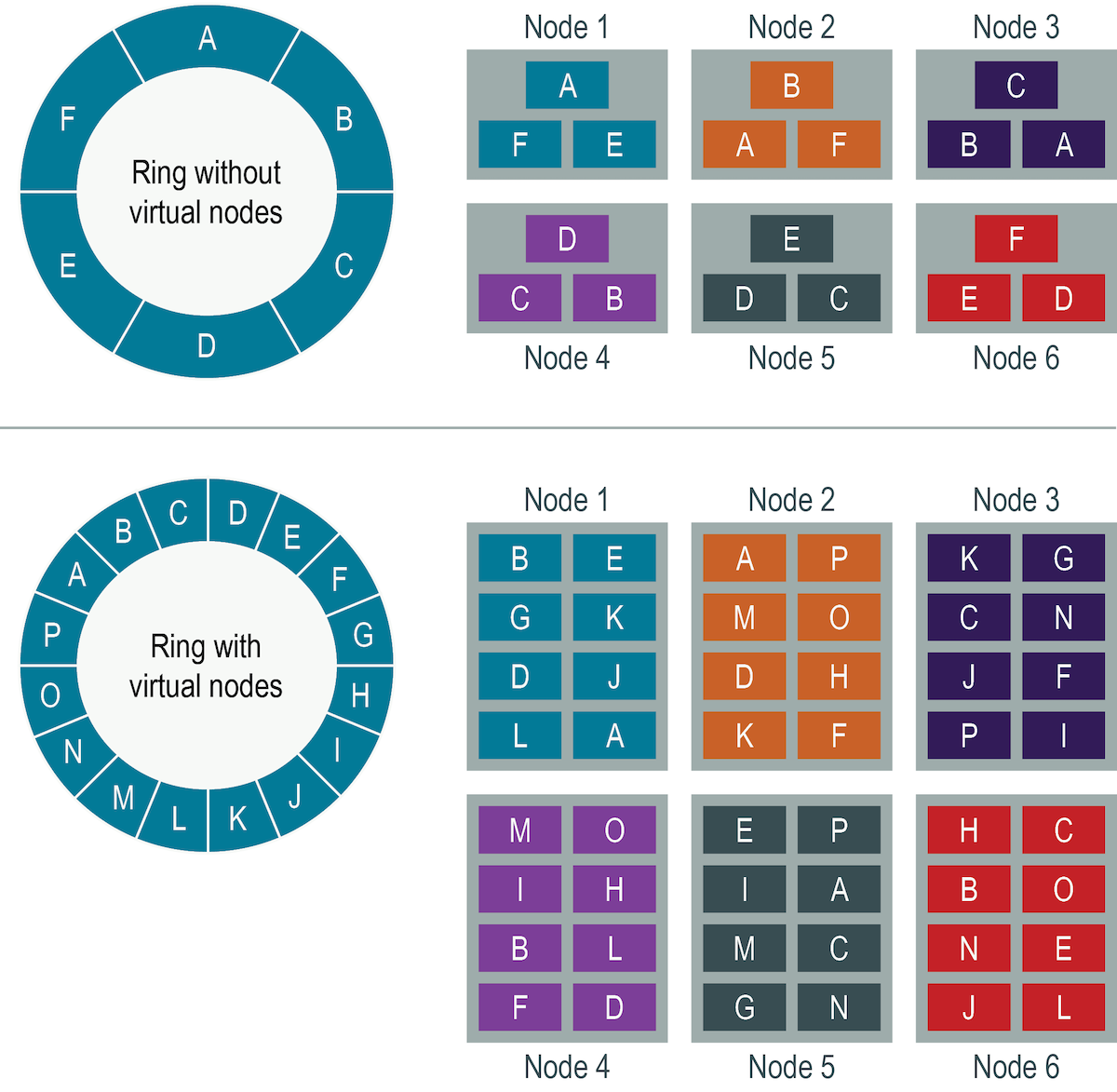
Benefits of Virtual Nodes
- Unlimited Scalability – Virtual nodes allow clusters to burst into the cloud and access near-infinite capacity. This is ideal for traffic spikes or workload surges.
- Reduced Infrastructure Overhead – Since virtual nodes do not require dedicated hardware, organizations avoid managing physical servers or VM fleets.
- Cost Efficiency – Pay only for the compute resources actually used. No idle node costs in low-traffic periods.
- Faster Deployment – Workloads can spin up instantly without waiting for nodes to boot or autoscaling groups to warm up.
- Better Multi-Cloud and Hybrid Integration – Virtual nodes serve as a bridge between on-premises infrastructure and external cloud services, enabling consistent deployment patterns.
Common Use Cases for Virtual Nodes
- Kubernetes Burst Capacity – Virtual nodes let Kubernetes deploy workloads to cloud-based serverless container services such as Azure Container Instances (ACI) or AWS Fargate.
- Cost-Optimized Batch Processing – Run short-lived workloads without maintaining a physical node pool.
- Edge and IoT Device Networking – Virtual nodes represent lightweight endpoints in decentralized networks.
- Distributed Storage Clusters – Logical nodes help scale storage pools without physical hardware expansion.
- Peer-to-Peer Systems – Nodes are virtualized to handle routing, replication, or consensus tasks efficiently.
Virtual Nodes vs. Physical Nodes
| Feature | Virtual Node | Physical Node |
|---|---|---|
| Hardware | Not tied to hardware | Runs on actual servers |
| Scalability | Instant, infinite | Limited by physical capacity |
| Cost | Pay-as-you-use | Requires upfront investment |
| Provisioning Time | Seconds | Minutes to hours |
| Management | Minimal | Requires maintenance, patching |
Virtual nodes complement physical nodes by enabling flexibility and on-demand scaling while keeping core workloads stable on traditional infrastructure.
Challenges and Considerations
Although virtual nodes provide major advantages, organizations should consider:
- Provider limitations (e.g., supported regions or features)
- Network latency between virtual and physical clusters
- Security implications when workloads run outside the main infrastructure
- Monitoring and cost visibility in multi-cloud environments
Planning and proper observability help mitigate these challenges.
Conclusion
A virtual node is a powerful tool in modern cloud computing and distributed system design. By decoupling workloads from physical hardware, virtual nodes enable rapid scaling, cost optimization, and flexible integration with cloud-native platforms. As businesses adopt more elastic and hybrid environments, virtual nodes play a key role in optimizing performance and simplifying infrastructure operations.