What Is Transmission Control Protocol (TCP)?
The Transmission Control Protocol (TCP) is one of the core building blocks of the Internet. It ensures that data is delivered accurately, reliably, and in the correct order between devices. Whether you’re browsing websites, sending emails, or streaming content, TCP plays a crucial role behind the scenes. In this guide, we’ll explore how TCP works, its key features, advantages, disadvantages, and real-world use cases – all optimized for both beginners and professionals in networking.
What Is Transmission Control Protocol (TCP)?
Transmission Control Protocol (TCP) is a connection-oriented communication protocol used to transmit data over a network. It operates at the transport layer of the TCP/IP model and is responsible for ensuring reliable data delivery between applications.
Unlike connectionless protocols, TCP establishes a connection before sending data and guarantees that packets arrive intact and in sequence.
How TCP Works
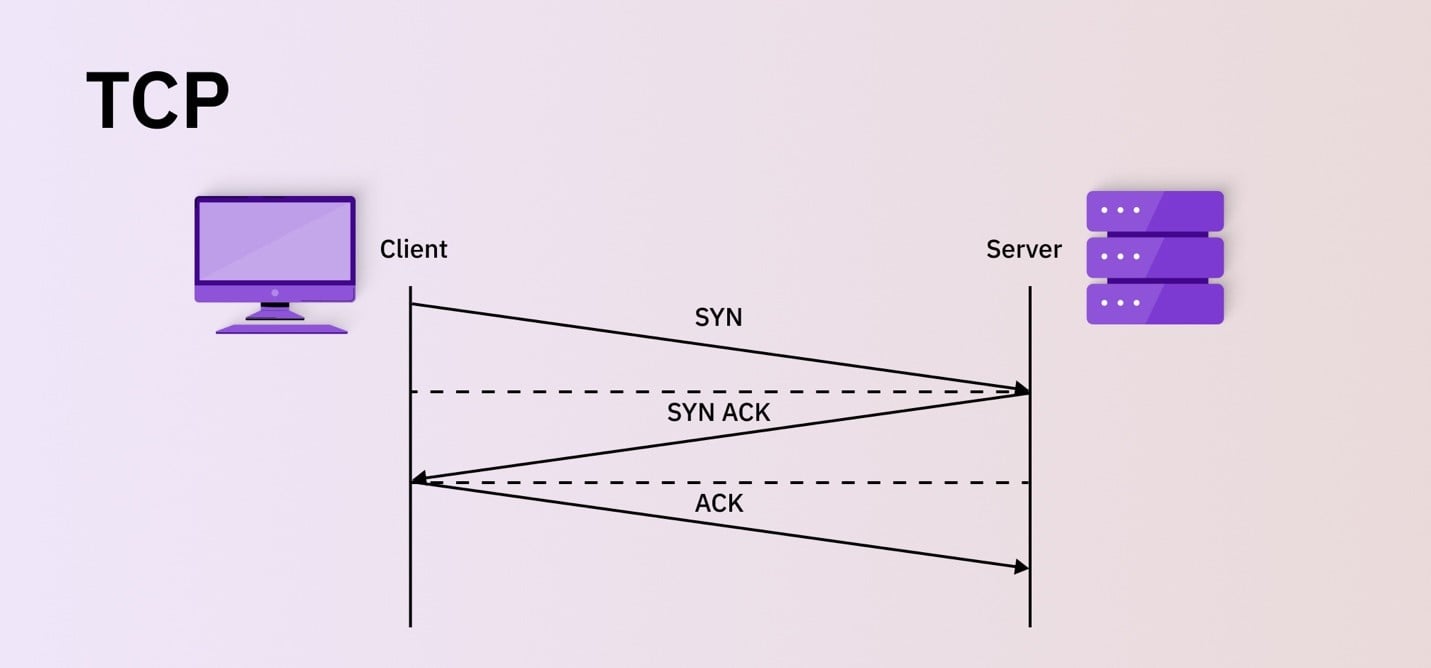
1. Connection Establishment (Three-Way Handshake)
Before data transmission begins, TCP establishes a connection using a three-way handshake:
- SYN: Client sends a synchronization request
- SYN-ACK: Server acknowledges and responds
- ACK: Client confirms the connection
This process ensures both devices are ready for communication.
2. Data Transmission
Once the connection is established:
- Data is broken into smaller units called segments
- Each segment is assigned a sequence number
- Segments are transmitted across the network
3. Error Detection and Correction
TCP ensures reliability through:
- Checksums to detect errors
- Acknowledgments (ACKs) to confirm receipt
- Retransmission of lost or corrupted segments
4. Flow Control
TCP uses windowing mechanisms to control the rate of data transmission, preventing the receiver from being overwhelmed.
5. Congestion Control
TCP dynamically adjusts transmission speed based on network conditions using algorithms like:
- Slow Start
- Congestion Avoidance
- Fast Retransmit
- Fast Recovery
6. Connection Termination
TCP gracefully closes a connection using a four-step termination process:
- FIN → ACK → FIN → ACK
Key Features of Transmission Control Protocol
- Reliable Data Delivery – TCP guarantees that data reaches its destination without loss or duplication.
- Ordered Data Transmission – Segments are reassembled in the correct order using sequence numbers.
- Error Checking – Built-in mechanisms ensure data integrity during transmission.
- Flow and Congestion Control – TCP optimizes performance and prevents network overload.
- Full-Duplex Communication – Data can be sent and received simultaneously.
TCP vs UDP: What’s the Difference?
| Feature | TCP | UDP |
|---|---|---|
| Connection Type | Connection-oriented | Connectionless |
| Reliability | High | Low |
| Speed | Slower | Faster |
| Error Handling | Yes | Minimal |
| Use Cases | Web, Email, File Transfer | Streaming, Gaming, VoIP |
Common Use Cases of TCP
- Web Browsing (HTTP/HTTPS) – TCP ensures the reliable delivery of web pages and resources.
- Email Services (SMTP, IMAP, POP3) – Guarantees accurate message transmission.
- File Transfers (FTP, SFTP) – Ensures complete and error-free file delivery.
- Remote Access (SSH) – Provides secure and reliable connections to remote systems.
Advantages of TCP
- Ensures reliable communication
- Provides error detection and recovery
- Maintains data integrity
- Supports congestion and flow control
- Widely supported across networks
Disadvantages of TCP
- Higher latency due to connection setup
- More overhead compared to simpler protocols
- Slower performance in real-time applications
- Not ideal for streaming or gaming
Transmission Control Protocol Header Structure
A TCP segment includes:
- Source Port
- Destination Port
- Sequence Number
- Acknowledgment Number
- Flags (SYN, ACK, FIN, etc.)
- Window Size
- Checksum
This structure enables TCP to manage data transmission effectively.
Why TCP Is Important
TCP is essential because it provides:
- Reliability in data transmission
- Consistency across networks
- Scalability for modern applications
- Foundation for Internet Communication
Without TCP, many critical online services would not function properly.
Best Practices for Using Transmission Control Protocol
- Optimize window size for performance
- Monitor network congestion
- Use TCP tuning for high-latency networks
- Combine with TLS/SSL for secure communication
- Analyze traffic using tools like Wireshark
Conclusion
The Transmission Control Protocol (TCP) is a fundamental component of modern networking. Its ability to ensure reliable, ordered, and error-free data delivery makes it indispensable for countless applications, from web browsing to enterprise systems. Understanding TCP not only helps in networking fundamentals but also improves performance optimization, troubleshooting, and system design.