Data Center Cooling: Strategies, Technologies, and Best Practices
Introduction to Data Center Cooling
Data center cooling is a critical component of modern IT infrastructure. As data centers continue to grow in size and power density, effective cooling solutions are essential to maintain optimal performance, prevent hardware failure, and reduce energy consumption. Without proper cooling, servers can overheat, leading to downtime, data loss, and increased operational costs.
Why Is It Important?
Data centers house servers, storage systems, and networking equipment that generate significant heat during operation. Effective cooling is necessary to:
- Maintain safe operating temperatures for IT equipment
- Improve system reliability and uptime
- Extend the lifespan of servers and components
- Reduce energy costs and environmental impact
- Comply with industry standards and regulations
Cooling can account for 30 – 50% of a data center’s total energy consumption, making efficiency a top priority.
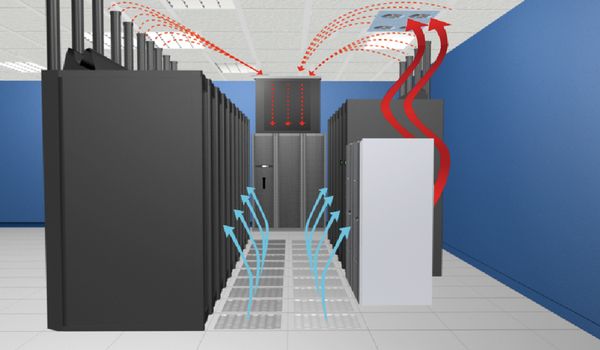
Key Data Center Cooling Technologies
1. Air-Based Cooling
Air cooling is the most widely used method in data centers.
Common air cooling approaches include:
- Computer Room Air Conditioners (CRAC)
- Computer Room Air Handlers (CRAH)
- Hot aisle / cold aisle containment
Advantages:
- Proven and widely supported
- Lower upfront cost
- Simple deployment
Limitations:
- Less efficient for high-density racks
- Higher energy consumption at scale
2. Liquid Cooling
Liquid cooling uses fluids to absorb and remove heat more efficiently than air.
Types of liquid cooling:
- Direct-to-chip cooling
- Immersion cooling
- Rear-door heat exchangers
Advantages:
- Supports high-density workloads
- Greater thermal efficiency
- Reduced fan and airflow requirements
Use cases:
- AI and machine learning workloads
- High-performance computing (HPC)
- GPU-dense environments
3. Free Cooling (Economizer Cooling)
Free cooling leverages external environmental conditions to reduce reliance on mechanical cooling.
Methods include:
- Air-side economizers
- Water-side economizers
Benefits:
- Significant energy savings
- Lower carbon footprint
- Ideal for cooler climates
Cooling Architecture and Design Best Practices
Hot Aisle and Cold Aisle Containment
Separating hot and cold air streams prevents mixing and improves cooling efficiency.
Benefits:
- Improved airflow management
- Lower cooling costs
- Higher rack density support
Proper Airflow Management
Effective airflow management includes:
- Sealing cable openings
- Using blanking panels
- Optimizing floor tile placement
These steps prevent air recirculation and ensure consistent cooling.
Monitoring and Thermal Management
Modern data centers rely on real-time monitoring tools to track temperature, humidity, and airflow.
Key metrics to monitor:
- Inlet and outlet temperatures
- Power usage effectiveness (PUE)
- Hot spot detection
Energy Efficiency and Sustainability
Power Usage Effectiveness (PUE)
PUE is a standard metric for measuring data center efficiency.
PUE formula:
Total Facility Energy ÷ IT Equipment Energy
Lower PUE values indicate more efficient cooling and power usage.
Green Data Center Cooling Solutions
Sustainable cooling strategies include:
- Renewable energy integration
- AI-driven cooling optimization
- Reuse of waste heat
- High-efficiency chillers
These approaches help organizations meet environmental goals and reduce operational expenses.
Emerging Trends in Data Center Cooling
- AI-powered cooling optimization
- Liquid cooling adoption for AI workloads
- Modular and edge data center cooling
- Carbon-aware cooling systems
- Advanced thermal materials
As workloads become more compute-intensive, cooling technologies are evolving rapidly to keep pace.
Choosing the Right Data Center Cooling Solution
When selecting a cooling strategy, consider:
- Data center size and location
- Rack density and workload type
- Energy efficiency goals
- Budget and scalability
- Compliance requirements
A hybrid approach combining air and liquid cooling is increasingly common.
Conclusion
Data center cooling is no longer just a support function – it’s a strategic factor that directly impacts performance, reliability, and sustainability. By adopting modern cooling technologies, implementing best practices, and focusing on energy efficiency, organizations can future-proof their data centers while reducing costs. As data center demands continue to rise, investing in efficient and intelligent cooling solutions is essential for long-term success.