Gigabit Ethernet: The Foundation of Modern High-Speed Networks
As businesses and households continue to rely on bandwidth-intensive applications, network performance has become more important than ever. From cloud computing and video conferencing to file sharing and virtualization, modern workloads demand faster and more reliable connectivity. Gigabit Ethernet has become the industry standard for local area networks (LANs), delivering speeds of up to 1 gigabit per second (1 Gbps) while maintaining compatibility with traditional Ethernet infrastructure. Today, it powers enterprise networks, data centers, educational institutions, and millions of home networks worldwide.
This guide explains everything you need to know about Gigabit Ethernet, including its technology, standards, benefits, applications, limitations, and best practices.
What Is Gigabit Ethernet?
Gigabit Ethernet (GbE) is an Ethernet networking technology capable of transmitting data at 1,000 megabits per second (1 Gbps), which is ten times faster than Fast Ethernet (100 Mbps).
It follows the IEEE 802.3 family of networking standards and provides high-speed communication over both copper and fiber optic cabling.
Gigabit Ethernet supports:
- Local Area Networks (LANs)
- Campus networks
- Enterprise networks
- Data centers
- Industrial automation
- Home networking
- IP surveillance systems
- Voice over IP (VoIP)
Today, Gigabit Ethernet is considered the minimum recommended speed for most modern wired networks.
How Does It Work?
Gigabit Ethernet operates using the same Ethernet frame format as previous Ethernet versions while significantly increasing transmission speed.
The communication process includes:
- A device generates Ethernet frames.
- Frames are sent through copper or fiber cables.
- Ethernet switches forward packets based on MAC addresses.
- The receiving device reconstructs the transmitted data.
Because Gigabit Ethernet maintains backward compatibility, it can communicate with older Ethernet devices using auto-negotiation.
Gigabit Ethernet Speed
Gigabit Ethernet provides:
- 1 Gbps
- 1,000 Mbps
- 125 MB/s theoretical maximum transfer rate
Real-world performance depends on:
- Network congestion
- Cable quality
- Switch performance
- Storage speed
- CPU capability
- Network drivers
Typical file transfer speeds range between 100–120 MB/s under optimal conditions.
Gigabit Ethernet Standards
Several IEEE standards define Gigabit Ethernet for different media types.
| Standard | Medium | Maximum Distance | Common Use |
|---|---|---|---|
| 1000BASE-T | Cat5e/Cat6 copper | 100 meters | Office LANs |
| 1000BASE-SX | Multimode fiber | 220–550 meters | Campus networks |
| 1000BASE-LX | Single-mode or multimode fiber | 5 km or more | Enterprise backbone |
| 1000BASE-CX | Shielded copper | 25 meters | Legacy equipment |
| 1000BASE-BX | Single fiber | Up to 10 km | Telecom networks |
Among these, 1000BASE-T is by far the most widely deployed standard.
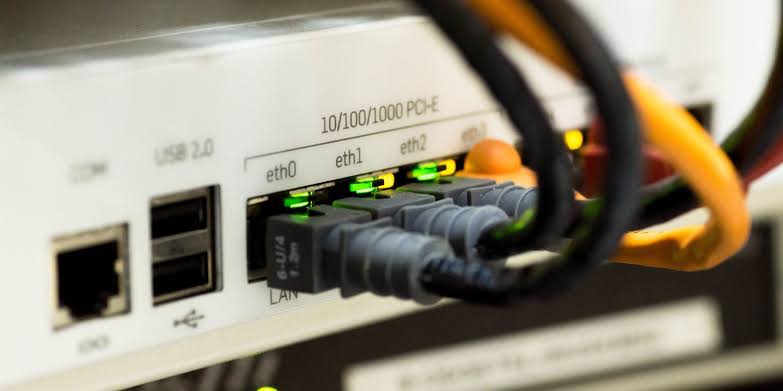
Gigabit Ethernet Cable Requirements
Choosing the proper cable is essential for achieving full Gigabit speeds.
Cat5e
- Supports 1 Gbps
- Up to 100 meters
- Affordable
- Most common
Cat6
- Better shielding
- Reduced interference
- Higher reliability
- Supports future upgrades
Cat6a
- Excellent noise resistance
- Supports 10 Gigabit Ethernet
- Ideal for new installations
Although older Cat5 cables may sometimes support Gigabit speeds, Cat5e or newer is recommended.
Components of a Gigabit Ethernet Network
A complete Gigabit Ethernet network typically includes:
Gigabit Network Interface Card (NIC)
Installed in:
- Desktop computers
- Servers
- Workstations
- Laptops
Modern motherboards usually include integrated Gigabit Ethernet ports.
Gigabit Ethernet Switch
A Gigabit switch connects multiple devices while forwarding traffic efficiently.
Benefits include:
- Wire-speed forwarding
- Low latency
- VLAN support
- QoS
- Link aggregation
- PoE support (on compatible models)
Router
The router connects the local network to external networks such as the Internet.
Many modern routers include:
- Gigabit WAN ports
- Multiple Gigabit LAN ports
- Hardware NAT
- Firewall functions
Ethernet Cables
Proper cabling ensures reliable communication with minimal packet loss.
Servers
Servers often include multiple Gigabit ports for:
- Redundancy
- Load balancing
- High availability
Some Advantages
Gigabit Ethernet offers numerous advantages over slower networking technologies.
Faster Data Transfer
Large files move significantly faster than on Fast Ethernet.
Examples include:
- Video editing
- CAD projects
- Database synchronization
- Software deployment
Improved Productivity
Employees spend less time waiting for:
- File uploads
- Downloads
- Backups
- Synchronization
Better Multimedia Performance
Gigabit Ethernet supports:
- 4K video streaming
- Video conferencing
- IP cameras
- IPTV
- Media servers
Low Latency
Lower transmission delays improve:
- Gaming
- Voice communication
- Financial applications
- Industrial automation
Reliable Connections
Wired Gigabit Ethernet provides:
- Stable bandwidth
- Minimal interference
- Lower packet loss
- Consistent performance
Cost Effectiveness
Gigabit networking hardware has become affordable, making it a cost-effective upgrade for most organizations.
Common Applications of Gigabit Ethernet
Gigabit Ethernet is used across virtually every industry.
Business Networks
Organizations use Gigabit Ethernet for:
- File servers
- ERP systems
- Cloud applications
- Collaboration tools
Data Centers
Gigabit Ethernet remains common for:
- Server management
- Storage networks
- Backup infrastructure
- Virtual machine traffic
Although newer deployments often use 10 Gbps or higher for core links, Gigabit Ethernet is still widely used at the access layer.
Home Networks
Consumers use Gigabit Ethernet for:
- Smart TVs
- Gaming consoles
- NAS devices
- Streaming
- Remote work
Healthcare
Hospitals rely on Gigabit Ethernet for:
- Electronic medical records
- Imaging systems
- Medical devices
- Laboratory networks
Education
Schools use Gigabit Ethernet for:
- Computer labs
- Online learning
- Administrative systems
- Campus Wi-Fi backhaul
Manufacturing
Industrial facilities deploy Gigabit Ethernet for:
- Automation
- Robotics
- PLC communication
- Monitoring systems
Gigabit Ethernet vs Fast Ethernet
| Feature | Fast Ethernet | Gigabit Ethernet |
|---|---|---|
| Speed | 100 Mbps | 1 Gbps |
| Maximum Throughput | 12.5 MB/s | 125 MB/s |
| Cable | Cat5 | Cat5e/Cat6 |
| Modern Suitability | Limited | Excellent |
| Streaming | HD | 4K/8K capable |
| Enterprise Usage | Legacy | Standard |
Gigabit Ethernet provides ten times the bandwidth of Fast Ethernet, making it the preferred choice for modern networks.
Gigabit Ethernet vs 10 Gigabit Ethernet
| Feature | Gigabit Ethernet | 10 Gigabit Ethernet |
|---|---|---|
| Speed | 1 Gbps | 10 Gbps |
| Cost | Lower | Higher |
| Hardware | Widely available | Enterprise-grade |
| Home Use | Common | Limited |
| Data Centers | Access layer | Core and aggregation |
| Cabling | Cat5e/Cat6 | Cat6a, Cat7, or fiber |
Organizations often deploy Gigabit Ethernet to end-user devices while using 10 Gigabit Ethernet for backbone connections.
Best Practices for Deploying Gigabit Ethernet
To maximize network performance:
- Use Cat5e or higher cabling.
- Replace outdated 100 Mbps switches.
- Enable full-duplex communication.
- Update NIC drivers and switch firmware.
- Monitor bandwidth usage regularly.
- Implement VLANs to segment traffic.
- Use Quality of Service (QoS) for latency-sensitive applications.
- Test cable quality with certified cable testers.
- Plan for future upgrades to multi-gigabit or 10 Gigabit Ethernet where needed.
Future of Gigabit Ethernet
While 10, 25, 40, 100, and even 400 Gigabit Ethernet technologies continue to expand in enterprise environments, Gigabit Ethernet remains highly relevant due to its balance of performance, affordability, and compatibility.
Emerging technologies such as 2.5 Gigabit Ethernet (2.5GbE) and 5 Gigabit Ethernet (5GbE) provide intermediate upgrade paths without requiring extensive recabling, making them attractive for organizations seeking higher throughput.
Conclusion
Gigabit Ethernet has become the backbone of modern wired networking by delivering a strong combination of speed, reliability, affordability, and broad compatibility. Whether you’re building a home network, upgrading an office infrastructure, or supporting enterprise applications, it provides the performance needed for today’s bandwidth-intensive workloads.
Although faster technologies such as 10 Gigabit Ethernet and multi-gigabit Ethernet are gaining adoption, Gigabit Ethernet remains the standard choice for most access networks due to its mature ecosystem, low deployment costs, and dependable performance.