IoT Network: Definition, Architecture, and Key Applications
The Internet of Things (IoT) is revolutionizing how devices connect, communicate, and share data. At the heart of this transformation lies the IoT network – the infrastructure that enables billions of smart devices to operate seamlessly. This article explores what an IoT network is, how it works, its architecture, and real-world applications.
What is an IoT Network?
An IoT network is a system of interconnected devices, sensors, and applications that exchange data over the internet or other communication channels. These devices range from wearable health trackers and smart home appliances to industrial machinery and autonomous vehicles. Unlike traditional networks, IoT networks are designed to handle massive device connections, low-power communication, and real-time data transmission.
Key Characteristics
- High Scalability – Supports thousands or millions of devices.
- Low Power Consumption – Many IoT devices run on a battery and require energy-efficient communication.
- Diverse Connectivity Protocols – Uses Wi-Fi, Bluetooth, Zigbee, LoRaWAN, NB-IoT, and more.
- Real-Time Data Processing – Enables instant decision-making.
- Enhanced Security – Protects sensitive data from cyber threats.
IoT Network Architecture
An IoT network typically consists of four core layers:
- Perception Layer (Device Layer) – Includes sensors, actuators, and smart devices that collect data from the environment.
- Network Layer – Transmits collected data to processing systems using protocols like MQTT, CoAP, HTTP, or LoRaWAN.
- Edge/Processing Layer – Performs initial data processing close to the data source to reduce latency.
- Application Layer – Converts processed data into actionable insights for users through dashboards, apps, or automated systems.
IoT Network Protocols
IoT devices communicate using a variety of network protocols depending on range, speed, and energy needs:
- Wi-Fi – High-speed connectivity for indoor IoT applications.
- Bluetooth Low Energy (BLE) – Ideal for wearable devices.
- Zigbee/Z-Wave – Low-power, short-range communication for smart homes.
- LoRaWAN – Long-range, low-power networking for rural IoT solutions.
- NB-IoT – Cellular-based IoT connectivity for large-scale deployments.
Applications of IoT Networks
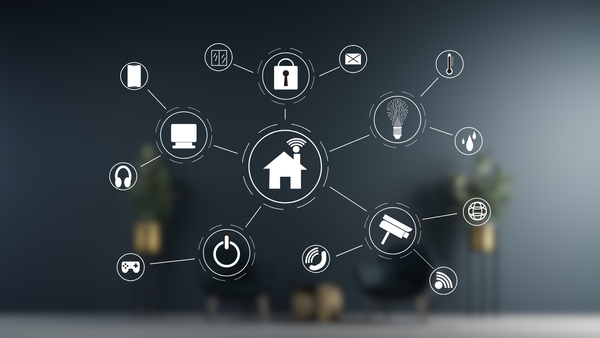
- Smart Homes – Automation of lighting, security, and appliances.
- Industrial IoT (IIoT) – Predictive maintenance, real-time monitoring, and automation in manufacturing.
- Smart Cities – Traffic management, waste management, and public safety.
- Healthcare – Remote patient monitoring and wearable health devices.
- Agriculture – Precision farming with soil sensors and automated irrigation.
Some Benefits
- Improved Efficiency – Automates repetitive tasks and optimizes resource use.
- Cost Savings – Reduces maintenance and operational expenses.
- Data-Driven Decisions – Real-time insights enable faster responses.
- Enhanced User Experience – Personalizes services for end users.
Challenges in IoT Networking
- Security Risks – Vulnerability to cyberattacks and data breaches.
- Interoperability Issues – Multiple protocols can create compatibility problems.
- Scalability Concerns – Managing millions of devices requires robust infrastructure.
Future of IoT Networks
With the rollout of 5G, IoT networks will achieve ultra-low latency, higher bandwidth, and the capacity to connect billions of devices simultaneously. The integration of AI and edge computing will further enhance automation, predictive analytics, and decision-making.
Conclusion
The IoT network is the backbone of the connected world, enabling devices to share data, automate processes, and improve efficiency across industries. As technology advances, IoT networks will become more secure, scalable, and intelligent—paving the way for a truly interconnected future.