Modern Data Center: The Backbone of Digital Transformation
In today’s hyperconnected world, the modern data center has become the digital heart of every enterprise. As organizations embrace cloud computing, AI, and edge technologies, the data center is evolving from a static facility into a dynamic, software-defined infrastructure that powers innovation, scalability, and resilience.
What Is a Modern Data Center?
A modern data center is a highly virtualized, automated, and energy-efficient facility that hosts computing, storage, and networking resources to support digital applications and services. Unlike traditional data centers, which relied on physical servers and manual management, modern data centers use software-defined architectures and cloud-native designs to deliver agility and scalability.
Key Characteristics:
- Virtualization & Containerization: Enables efficient resource utilization and rapid deployment of applications.
- Automation & Orchestration: Reduces human intervention through AI-driven workflows and policy-based management.
- Hybrid & Multi-Cloud Integration: Combines on-premises infrastructure with public and private cloud environments.
- Security by Design: Implements zero-trust frameworks and real-time threat detection.
- Sustainability: Focuses on green IT initiatives and energy efficiency to reduce carbon footprints.
Core Components of a Modern Data Center
- Compute Infrastructure – High-performance servers powered by CPUs, GPUs, and specialized accelerators for AI and analytics.
- Storage Systems – All-flash arrays, software-defined storage (SDS), and object storage for fast and scalable data access.
- Network Fabric – Software-defined networking (SDN) for programmable and automated connectivity.
- Data Center Interconnect (DCI) – Ensures seamless data transfer across distributed environments.
- Monitoring & Management Tools – Centralized dashboards for real-time visibility and predictive analytics.
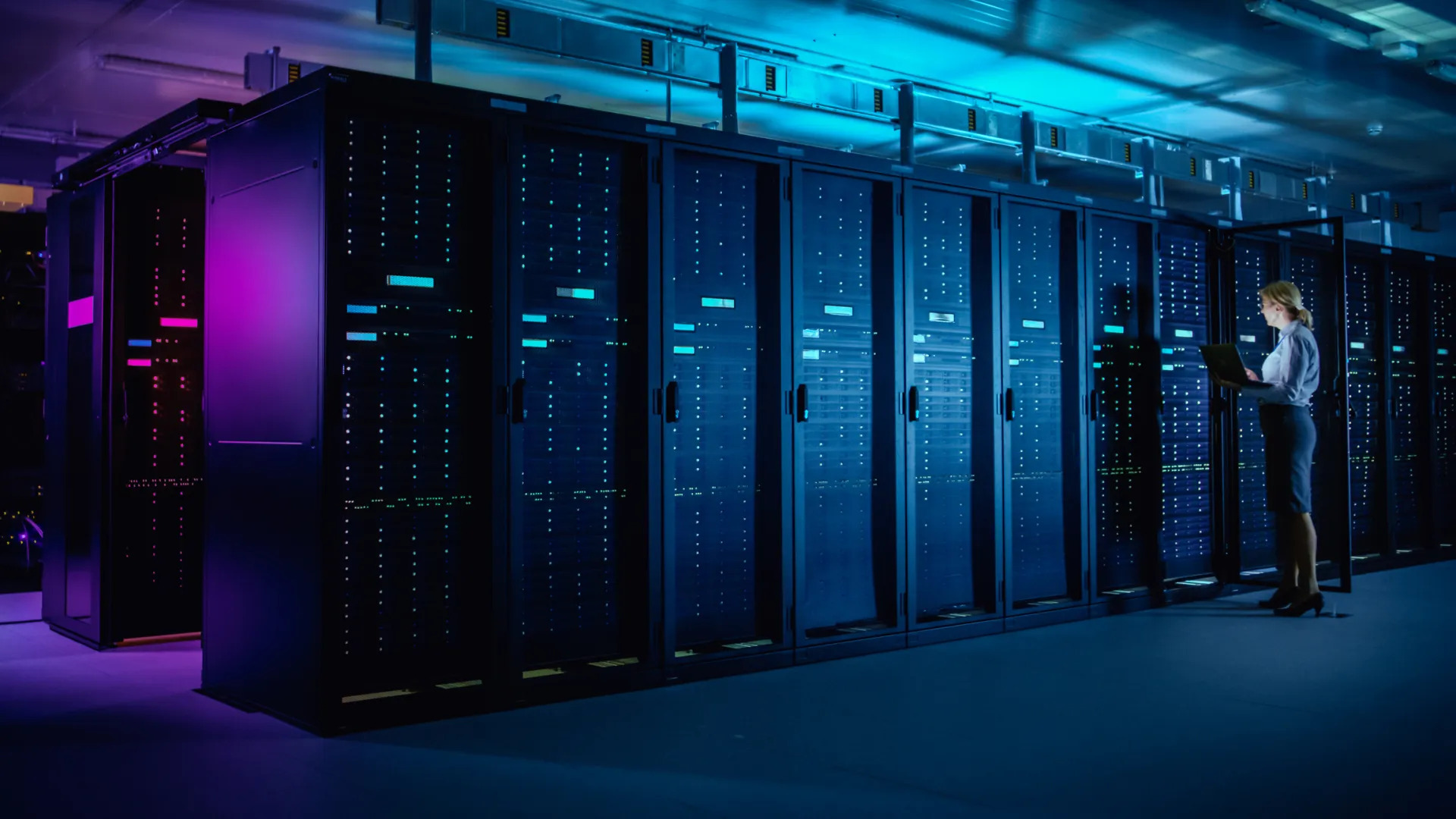
Modern Data Center Architectures
- Software-Defined Data Center (SDDC) – SDDC abstracts compute, storage, and networking resources into software-based services, providing full automation and flexibility.
- Hyperconverged Infrastructure (HCI) – HCI integrates compute, storage, and networking into a single system managed through a unified interface – ideal for scalability and simplified operations.
- Edge Data Centers – These are smaller, decentralized facilities placed closer to users or IoT devices to reduce latency and improve performance for real-time applications.
Benefits of a Modern Data Center
- Agility: Rapid deployment of workloads and services.
- Scalability: Elastic infrastructure that grows with business demands.
- Resilience: Built-in redundancy and disaster recovery.
- Security: End-to-end encryption and micro-segmentation.
- Cost Efficiency: Reduced CAPEX through automation and cloud integration.
- Sustainability: Energy-efficient cooling and renewable power usage.
Modern Data Center Trends (2025 and Beyond)
- AI-Driven Operations (AIOps) for intelligent monitoring and self-healing systems.
- Liquid Cooling to support high-density compute environments.
- Quantum-Ready Networking for next-generation data processing.
- Sustainability Metrics and carbon-neutral initiatives.
- Edge-to-Cloud Continuity for distributed digital ecosystems.
Conclusion
The modern data center is no longer just a physical space—it’s an intelligent, adaptive ecosystem. As enterprises pursue digital transformation, data centers will continue to evolve toward autonomous, cloud-native, and sustainable architectures. Investing in modernization today ensures readiness for tomorrow’s data-driven future.