Orthogonal Frequency Division Multiplexing (OFDM): How It Powers Modern Wireless Networks
Orthogonal frequency division multiplexing, or OFDM, is a digital transmission technique that sends data across many closely spaced radio subcarriers instead of relying on one fast, wide channel. It is a foundational technology behind modern broadband communications, including Wi‑Fi, 4G LTE, 5G, digital television, and some DSL systems. Its core advantage is practical: OFDM helps wireless systems deliver fast, reliable data even when signals bounce off buildings, walls, vehicles, and other obstacles.
What is Orthogonal Frequency Division Multiplexing?
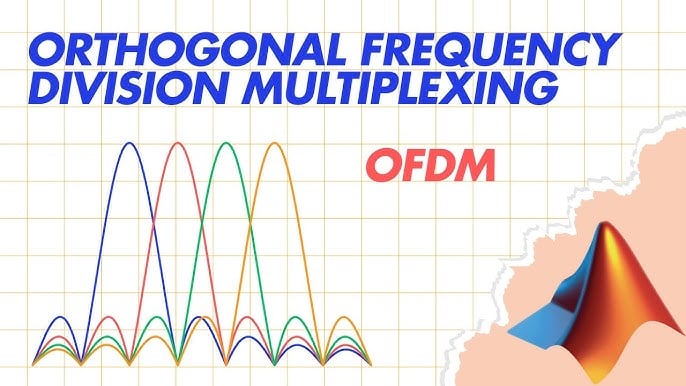
OFDM divides a high-speed data stream into many slower parallel streams. Each stream modulates its own narrowband subcarrier, and all subcarriers are transmitted at the same time. The “orthogonal” part is what makes the method efficient. The subcarriers are mathematically arranged so that receivers can separate them even though their frequency spectra overlap. This enables OFDM to use available spectrum more efficiently than conventional frequency-division multiplexing, which typically needs guard bands between channels.
In simple terms, OFDM is like turning one busy highway lane into many coordinated lanes. Each lane carries part of the traffic, and the receiver knows exactly how to sort the traffic back into its original order.
How OFDM works
An OFDM transmitter typically follows these steps:
- Split the data stream into many lower-rate parallel streams.
- Map data to symbols, often using modulation schemes such as QPSK or QAM.
- Assign symbols to subcarriers in the frequency domain.
- Use an inverse fast Fourier transform (IFFT) to create the time-domain OFDM signal.
- Add a cyclic prefix before sending each OFDM symbol.
- Transmit the signal through the wireless or wired channel.
At the receiver, the process is reversed. The receiver removes the cyclic prefix, applies a fast Fourier transform (FFT), estimates the channel, equalizes each subcarrier, and reconstructs the original data.
Why the cyclic prefix matters
Wireless signals often arrive at a receiver along multiple paths. A direct signal may arrive first, followed by delayed reflections from nearby objects. This effect, called multipath propagation, can cause symbols to overlap and create intersymbol interference.
OFDM addresses this challenge with a cyclic prefix: a short copy of the end of an OFDM symbol placed at its beginning. If the prefix is longer than the channel’s delay spread, it helps protect the useful portion of the symbol from delayed echoes and simplifies equalization at the receiver.
Key advantages of Orthogonal Frequency Division Multiplexing
- High spectral efficiency – Because OFDM subcarriers can overlap while remaining orthogonal, the technology uses bandwidth efficiently. This is especially important where radio spectrum is scarce and expensive.
- Strong resistance to multipath fading – Rather than forcing one wideband signal to deal with a complex channel, OFDM breaks the channel into many narrowband subchannels. Each subcarrier is easier to equalize and less affected by frequency-selective fading.
- Flexible resource allocation – Networks can assign different groups of subcarriers to different users, services, or quality levels. They can also select higher-order modulation for good channel conditions and more robust modulation when conditions worsen.
- Digital implementation – FFT and IFFT processing make OFDM practical to implement in digital signal processors and modern radio hardware. This scalability has helped it become a major waveform technology for broadband systems.
Limitations of OFDM
OFDM is powerful, but it comes with engineering trade-offs.
- High peak-to-average power ratio (PAPR): OFDM signals can have large peaks, which demand efficient but linear power amplifiers.
- Sensitivity to synchronization errors: Frequency offsets, phase noise, and timing errors can reduce orthogonality and create intercarrier interference.
- Cyclic-prefix overhead: The cyclic prefix improves reliability but does not carry new user data, so it reduces net efficiency.
- Channel estimation complexity: Receivers need accurate pilot signals and channel estimates to recover data reliably.
These limitations are why real-world OFDM systems use careful synchronization, error correction, adaptive modulation, and advanced antenna techniques.
OFDM applications
Orthogonal Frequency Division Multiplexing appears across many communications technologies:
- Wi‑Fi: OFDM is central to modern IEEE 802.11 wireless LAN standards.
- 4G LTE: LTE uses OFDM-based radio transmission to support high mobile-data throughput.
- 5G NR: The 5G New Radio physical layer is based on cyclic-prefix OFDM; the uplink can also use DFT-s-OFDM.
- Digital broadcasting: Systems such as DVB-T and DAB use coded OFDM to improve reception in environments with reflections and interference.
- DSL broadband: Discrete multitone modulation, a closely related approach, divides copper-line bandwidth into many subchannels.
Orthogonal Frequency Division Multiplexing vs. traditional FDM
Traditional frequency-division multiplexing (FDM) separates channels with guard bands to prevent overlap. OFDM also divides a channel into subcarriers, but its subcarriers are carefully spaced to preserve orthogonality.
That distinction lets OFDM pack more subcarriers into the same bandwidth while still allowing the receiver to distinguish them. The result is better spectral efficiency and improved performance in multipath environments.
The role of OFDM in 5G
OFDM remains highly relevant in 5G because it balances flexibility, implementation maturity, and performance. 5G NR supports scalable subcarrier spacing, allowing the system to adapt its waveform settings to different frequency bands and deployment scenarios.
Combined with MIMO, beamforming, flexible scheduling, and advanced coding, OFDM helps 5G networks support services ranging from mobile broadband to industrial connectivity.
Conclusion
Orthogonal frequency division multiplexing is one of the most important technologies in modern digital communications. By splitting data across many orthogonal subcarriers and using a cyclic prefix to manage multipath interference, OFDM enables the high-speed, reliable connections expected from Wi‑Fi, LTE, 5G, and digital broadcasting. As wireless networks continue to evolve, OFDM’s flexibility and proven performance ensure it will remain a central part of broadband connectivity.