What Is Data Center Switching?
What Is Data Center Switching?
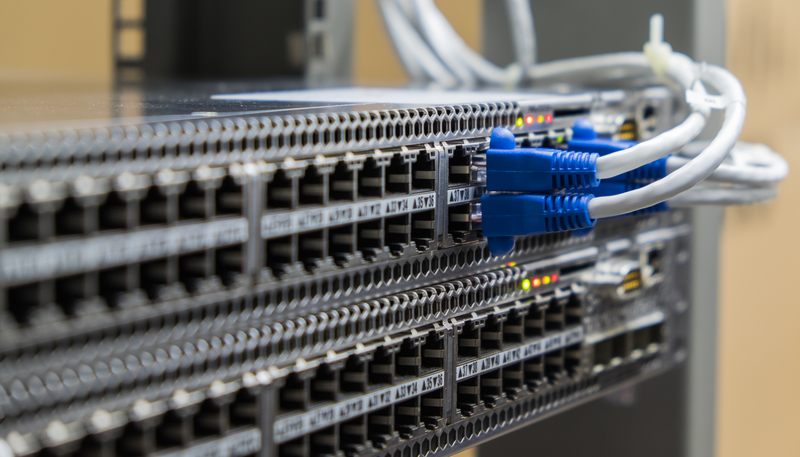
Data center switching refers to the network switching technologies and architectures that interconnect servers, storage systems, and applications within a data center. These switches form the backbone of modern IT infrastructure, enabling high-speed, low-latency, and highly reliable data communication across physical, virtual, and cloud-native environments.
As workloads become more distributed and data-intensive, data center switching has evolved from simple Layer 2 connectivity into a sophisticated, software-driven fabric that supports cloud computing, virtualization, containers, and AI workloads.
Why Does It Matter?
Modern enterprises rely on data center switching to achieve:
- High throughput for east-west traffic between servers
- Low latency for real-time applications and databases
- Scalability to support growth and bursty workloads
- High availability with minimal downtime
- Security and segmentation across tenants and applications
Without a robust data center switching architecture, performance bottlenecks, network congestion, and operational complexity quickly become major business risks.
Core Components of Data Center Switching
1. Top-of-Rack (ToR) Switches
Installed at the top of each server rack, ToR switches connect servers directly and uplink to aggregation or spine switches. They reduce cabling complexity and improve scalability.
2. Leaf-Spine Architecture
The most common modern design, leaf-spine switching, ensures consistent latency and predictable performance by connecting every leaf switch to every spine switch.
Key benefits:
- Non-blocking architecture
- Horizontal scalability
- Simplified network design
3. Core and Aggregation Switches
In traditional three-tier architectures, aggregation and core switches manage traffic between racks and external networks. While still used in some environments, many data centers now favor leaf-spine designs.
Key Data Center Switching Technologies
Layer 2 and Layer 3 Switching
- Layer 2 switching focuses on MAC-based forwarding and is often used within racks.
- Layer 3 switching enables IP-based routing, better scalability, and loop-free designs using ECMP (Equal-Cost Multi-Path).
Most modern data centers adopt Layer 3 at the leaf to reduce broadcast domains and improve resilience.
Software-Defined Networking (SDN)
SDN decouples the control plane from the data plane, enabling centralized network management and automation.
Advantages of SDN in data center switching:
- Faster provisioning
- Policy-based traffic control
- Improved visibility and troubleshooting
- Seamless integration with cloud platforms
Virtual Switching
Virtual switches, such as those embedded in hypervisors or container platforms, extend switching capabilities into virtualized environments.
They support:
- VM-to-VM traffic
- Microsegmentation
- Integration with physical data center switches
Performance Metrics in Data Center Switching
When evaluating data center switching solutions, key metrics include:
- Port speed (10GbE, 25GbE, 40GbE, 100GbE, 400GbE)
- Latency (microsecond-level forwarding)
- Buffer capacity for congestion handling
- Packet forwarding rate
- Redundancy and failover time
High-performance switching is especially critical for AI training, big data analytics, and high-frequency transaction systems.
Data Center Switching and Cloud Environments
- Private Cloud – In private data centers, switching must support automation, multi-tenancy, and workload mobility across clusters.
- Hybrid and Multi-Cloud – Data center switching integrates with cloud gateways and interconnects to ensure secure and consistent connectivity between on-premises and public cloud environments.
Security in Data Center Switching
Modern data center switches incorporate advanced security features such as:
- Network segmentation (VLANs, VXLAN)
- Access control lists (ACLs)
- Microsegmentation policies
- Encrypted traffic support
- Integration with zero-trust architectures
Security is no longer an add-on but a built-in requirement of data center switching design.
Automation and Operations
Automation plays a critical role in managing large-scale switching environments.
Common automation approaches include:
- Infrastructure as Code (IaC)
- API-driven switch configuration
- Zero-touch provisioning
- Telemetry and real-time monitoring
These capabilities reduce human error and improve operational efficiency.
Emerging Trends in Data Center Switching
- 400G and 800G Ethernet adoption
- AI-optimized switching fabrics
- Intent-based networking
- Disaggregated switching hardware
- Greater integration with Kubernetes and container platforms
These trends are shaping the future of scalable, high-performance data center networks.
Choosing the Right Data Center Switching Solution
When selecting a data center switching platform, organizations should consider:
- Current and future bandwidth requirements
- Compatibility with existing infrastructure
- Automation and orchestration capabilities
- Vendor ecosystem and support
- Total cost of ownership (TCO)
A well-designed switching strategy aligns network architecture with business and application needs.
Conclusion
Data center switching is the foundation of modern digital infrastructure, enabling high-speed connectivity, scalability, and resilience across enterprise and cloud environments. As workloads continue to grow in complexity and scale, investing in advanced data center switching architectures is essential for maintaining performance, security, and operational agility. By adopting modern switching technologies, automation, and scalable designs, organizations can build data centers that are ready for the demands of tomorrow’s digital economy.