What Is Data Communication?
Data communication is the foundation of every modern digital system. Whether you’re sending an email, streaming a video, browsing a website, or transferring files between servers, you’re relying on data communication to move information efficiently and securely. As businesses increasingly adopt cloud computing, IoT, artificial intelligence, and remote work solutions, reliable data communication has become more important than ever. It enables devices, applications, and users to exchange information quickly across local and global networks.
In this comprehensive guide, we’ll explore what data communication is, how it works, its essential components, transmission methods, communication types, protocols, advantages, challenges, and real-world applications.
What Is Data Communication?
Data communication is the process of transmitting digital or analog data between two or more devices through a communication medium. The goal is to deliver information accurately, efficiently, and securely from a sender to a receiver.
The transmitted data may include:
- Text
- Images
- Audio
- Video
- Files
- Database records
- Sensor information
- Application data
The communication may occur over:
- Copper cables
- Fiber optic cables
- Wireless networks
- Satellite links
- Cellular networks
- Internet infrastructure
Without data communication, modern networking and internet services would not exist.
Why Is Data Communication Important?
Almost every digital activity depends on data communication.
Examples include:
- Video conferencing
- Cloud storage synchronization
- Online gaming
- Banking transactions
- Industrial automation
- Smart homes
- Healthcare systems
- Enterprise networking
- Remote work
- Internet browsing
Reliable communication ensures information reaches its destination without errors or unnecessary delays.
How Data Communication Works
The basic communication process follows these steps:
- A sender creates data.
- The data is encoded into signals.
- Signals travel through a transmission medium.
- Network devices forward the signals.
- The receiver decodes the signals.
- The original information is reconstructed.
Throughout this process, communication protocols ensure that devices understand each other and exchange information correctly.
Components of Data Communication
Every data communication system consists of several essential elements.
1. Sender
The sender is the device that generates and transmits data.
Examples:
- Laptop
- Smartphone
- Server
- IoT sensor
- Security camera
2. Receiver
The receiver accepts and processes incoming data.
Examples:
- Desktop computer
- Cloud server
- Smart TV
- Mobile phone
- Industrial controller
3. Message
The message is the information being transmitted.
It may include:
- Documents
- Emails
- Images
- Voice calls
- Videos
- Commands
- Sensor readings
4. Transmission Medium
The transmission medium carries signals between devices.
Common media include:
Guided Media
- Twisted pair cable
- Coaxial cable
- Fiber optic cable
Unguided Media
- Wi-Fi
- Bluetooth
- Radio waves
- Microwave
- Infrared
- Satellite
5. Protocol
Protocols define communication rules.
Examples include:
- TCP
- IP
- UDP
- HTTP
- HTTPS
- FTP
- SMTP
- DNS
Protocols determine:
- Addressing
- Routing
- Error handling
- Data formatting
- Flow control
- Security
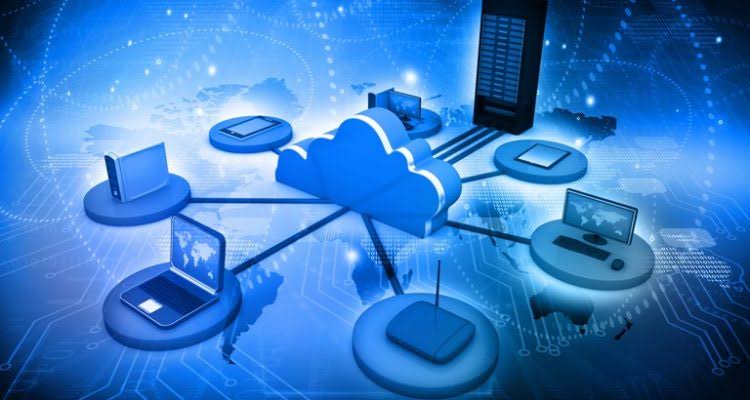
Data Communication Networks
Communication occurs over different network sizes.
Personal Area Network (PAN)
Examples:
- Bluetooth
- Wearable devices
Range:
Approximately 10 meters.
Local Area Network (LAN)
Connects devices inside:
- Homes
- Offices
- Schools
LANs provide high-speed communication.
Metropolitan Area Network (MAN)
Covers an entire city or metropolitan area. Often connects multiple LANs.
Wide Area Network (WAN)
Connects networks across countries and continents. The Internet is the world’s largest WAN.
Common Data Communication Protocols
Protocols standardize communication.
TCP
Transmission Control Protocol provides reliable delivery.
Features:
- Error recovery
- Packet sequencing
- Flow control
UDP
User Datagram Protocol emphasizes speed.
Common applications:
- Live streaming
- Gaming
- VoIP
IP
Internet Protocol handles logical addressing and routing. Every internet-connected device uses an IP address.
HTTP and HTTPS
Used for web communication. HTTPS adds encryption using SSL/TLS.
FTP
Transfers files between computers.
Often used for:
- Website management
- File uploads
- Server administration
SMTP
Handles outgoing email delivery.
DNS
Converts domain names into IP addresses. Without DNS, users would need to memorize numerical IP addresses.
Data Communication Models
Two major communication models are widely used.
OSI Model
The OSI model contains seven layers:
- Physical
- Data Link
- Network
- Transport
- Session
- Presentation
- Application
It provides a conceptual framework for networking.
TCP/IP Model
The TCP/IP model includes four layers:
- Link
- Internet
- Transport
- Application
It forms the basis of today’s Internet.
Data Communication Devices
Several networking devices facilitate communication.
- Router – Routes packets between networks.
- Switch – Connects devices within a LAN.
- Hub – Broadcasts incoming traffic to all connected devices. Rarely used today.
- Modem – Converts digital signals to analog signals and vice versa. Used for internet access.
- Gateway – Connects networks using different communication protocols.
- Wireless Access Point – Provides Wi-Fi connectivity for wireless devices.
Factors Affecting Data Communication Performance
Several factors influence network performance.
Bandwidth
Higher bandwidth allows more data transfer.
Latency
Lower latency improves responsiveness.
Packet Loss
Lost packets reduce communication quality.
Network Congestion
Heavy traffic slows transmission.
Noise
Electrical or radio interference can corrupt signals.
Distance
Longer transmission distances increase signal attenuation.
Error Detection and Error Control
Reliable communication requires detecting and correcting errors.
Common techniques include:
- Parity check
- Checksum
- Cyclic Redundancy Check (CRC)
- Forward Error Correction (FEC)
- Automatic Repeat Request (ARQ)
These mechanisms ensure accurate data delivery.
Security in Data Communication
Modern communication systems implement multiple security measures. Common protections include:
- Encryption – Protects data confidentiality during transmission. Examples: AES, TLS, SSL…
- Authentication – Verifies user identity before granting access.
- Firewalls – Filter unauthorized network traffic.
- VPN – Encrypts communication across public networks.
- Intrusion Detection Systems – Monitor suspicious network activities.
Advantages of Data Communication
Organizations benefit significantly from effective communication systems.
Major advantages include:
- Faster information sharing
- Improved collaboration
- Remote accessibility
- Reduced operational costs
- Real-time communication
- Higher productivity
- Cloud service integration
- Scalable infrastructure
- Business continuity
- Automation support
Challenges of Data Communication
Despite its benefits, several challenges remain.
Common issues include:
- Network congestion
- Security threats
- Cyberattacks
- Packet loss
- Latency
- Hardware failures
- Bandwidth limitations
- Configuration complexity
- Wireless interference
- Maintenance costs
Proper network planning minimizes these problems.
Best Practices for Efficient Data Communication
Organizations can improve communication performance by following these practices:
- Use high-speed networking equipment.
- Upgrade to fiber optic connections where appropriate.
- Implement Quality of Service (QoS) for critical traffic.
- Encrypt sensitive data in transit.
- Monitor network performance continuously.
- Update networking hardware and software regularly.
- Segment networks to reduce congestion.
- Deploy redundant communication links for high availability.
- Use reliable routing protocols.
- Perform regular security audits and vulnerability assessments.
Conclusion
Data communication is the backbone of today’s connected world, enabling seamless information exchange across devices, networks, and continents. From simple file transfers to complex cloud infrastructures and IoT ecosystems, efficient communication systems power virtually every aspect of modern computing.
Understanding the components, transmission modes, protocols, network types, and security practices behind data communication helps individuals and organizations build reliable, scalable, and secure networks. As technologies such as 5G, edge computing, artificial intelligence, and the Internet of Things continue to evolve, the importance of robust data communication will only continue to grow.