What Is Dynamic Channel Allocation?
What Is Dynamic Channel Allocation?
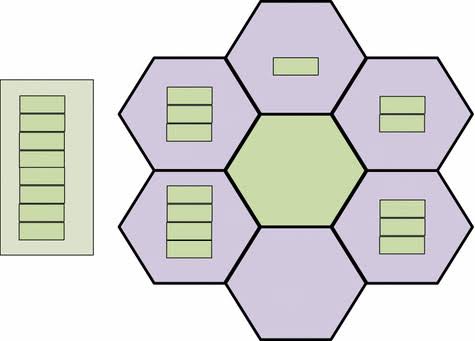
Dynamic channel allocation (DCA) is a communication network technique that assigns available communication channels to users or devices based on current demand, network conditions, and channel availability. Unlike fixed channel allocation, which permanently assigns specific channels to particular cells or users, dynamic channel allocation allows channels to be allocated and released as needed.
Dynamic channel allocation is commonly used in wireless communication systems, cellular networks, wireless local area networks (WLANs), and other shared communication environments. It helps improve spectrum utilization, reduce interference, and accommodate changing traffic demands.
In modern wireless networks, efficient channel management is essential because multiple devices compete for limited radio spectrum. Dynamic channel allocation provides a flexible approach to distributing these resources, helping networks maintain reliable communication while supporting a growing number of connected devices.
How Does It Work?
Dynamic channel allocation operates by monitoring network conditions and assigning available channels when communication requests arise. The allocation process may consider factors such as traffic demand, signal quality, interference levels, channel availability, and the number of active users.
A typical dynamic channel allocation process involves the following steps:
- Monitor network conditions: The network collects information about channel availability, traffic demand, interference, and signal quality.
- Receive a connection request: A user or device requests access to the communication network.
- Evaluate available channels: The allocation system identifies channels that can support the requested connection.
- Select an appropriate channel: An allocation algorithm chooses a channel based on predefined criteria, such as minimizing interference or maximizing capacity.
- Assign the channel: The selected channel is allocated to the requesting device or connection.
- Release the channel: When the connection ends or no longer requires the resource, the channel becomes available for future use.
The allocation process can be centralized, with a controller making decisions for multiple devices, or distributed, with individual devices or network nodes making decisions based on local information.
The exact implementation depends on the communication technology and network architecture.
Types of Dynamic Channel Allocation
Dynamic channel allocation can be implemented using several approaches. The main differences involve how channel information is collected, where allocation decisions are made, and how resources are selected.
1. Centralized Dynamic Channel Allocation
In centralized dynamic channel allocation, a central controller manages channel assignments across a network or a defined group of cells.
When a connection request arrives, the controller evaluates available channels and selects one that meets the network’s requirements. It can use information from multiple cells or access points to coordinate channel usage and reduce interference.
Advantages:
- Provides a broader view of network conditions.
- Can coordinate channel assignments across multiple cells.
- Supports consistent allocation policies.
- Can optimize resource utilization at the network level.
Disadvantages:
- Requires communication between network nodes and the controller.
- May introduce signaling overhead and allocation delays.
- Depends on the availability and reliability of the control system.
Centralized allocation is useful when network operators need coordinated management of shared radio resources.
2. Distributed Dynamic Channel Allocation
Distributed dynamic channel allocation allows individual base stations, access points, or network nodes to make channel allocation decisions using locally available information.
Each node evaluates channel availability and interference conditions before selecting a suitable channel. Depending on the system, nodes may also exchange information with neighboring nodes to avoid conflicting assignments.
Advantages:
- Reduces dependence on a central controller.
- Can respond quickly to local traffic changes.
- Supports scalable network architectures.
- May improve resilience when centralized coordination is unavailable.
Disadvantages:
- Nodes may have incomplete information about network-wide conditions.
- Independent decisions can result in conflicting channel assignments.
- Coordination and interference management can become more complex.
Distributed allocation is particularly useful in networks where local conditions change frequently, and rapid adaptation is important.
3. Hybrid Dynamic Channel Allocation
Hybrid dynamic channel allocation combines centralized and distributed approaches. A central controller may establish allocation policies or coordinate major decisions, while individual network nodes handle routine channel assignments locally.
This approach balances network-wide optimization with local responsiveness. It can be suitable for large wireless systems where centralized control alone may be inefficient, but fully distributed allocation may not provide enough coordination.
Hybrid allocation is often considered when network designers need flexibility, scalability, and effective interference management.
Dynamic Channel Allocation Algorithms
Dynamic channel allocation relies on algorithms that determine which channel should be assigned to each connection. Different algorithms prioritize different objectives, including minimizing interference, maximizing throughput, reducing blocking probability, and balancing traffic loads.
First-Available Channel
The first-available-channel algorithm assigns the first channel that meets the system’s availability requirements.
This method is relatively simple and can reduce the computational effort required to process connection requests. However, it may not produce the best overall allocation when channel conditions and interference levels vary significantly.
Least-Interference Channel
A least-interference algorithm selects the available channel with the lowest estimated interference.
This approach can improve communication reliability and reduce interference between neighboring cells or access points. Its effectiveness depends on the accuracy and freshness of interference measurements.
Channel Selection Based on Traffic Load
Traffic-aware algorithms consider the current demand on different channels or network areas. They attempt to distribute connections efficiently, preventing some channels from becoming overloaded while others remain underutilized.
Load-aware allocation is especially relevant in networks with uneven traffic patterns, such as busy urban areas, office buildings, and public wireless hotspots.
Optimization-Based Allocation
Optimization-based algorithms evaluate multiple possible channel assignments against an objective function. The objective may include maximizing network capacity, minimizing interference, reducing call blocking, or balancing several performance indicators.
These algorithms can produce effective allocations but may require more processing power, network information, and computation time than simpler approaches.
Dynamic Channel Allocation vs. Fixed Channel Allocation
Dynamic channel allocation and fixed channel allocation are two approaches to managing communication channels in shared networks.
Fixed channel allocation assigns predetermined channels to specific cells, access points, or users. Dynamic channel allocation selects channels according to current conditions and resource availability.
| Feature | Dynamic Channel Allocation | Fixed Channel Allocation |
|---|---|---|
| Channel assignment | Changes according to demand and availability | Predetermined assignments |
| Resource utilization | Can adapt to changing traffic | May leave resources unused in some areas |
| Interference management | Can respond to changing interference | Depends largely on the fixed channel plan |
| Implementation complexity | Generally higher | Generally lower |
| Control overhead | May require measurements and coordination | Often lower during routine operation |
| Traffic adaptation | Flexible | Limited unless reassignment is supported |
| Best suited for | Variable traffic and changing conditions | Stable environments with predictable demand |
Dynamic channel allocation can improve resource utilization when traffic patterns change frequently. However, it is not always superior to fixed allocation. In predictable environments, fixed allocation may be easier to operate and may deliver sufficient performance with less signaling and computational overhead.
Benefits of Dynamic Channel Allocation
Dynamic channel allocation offers several advantages for wireless and shared communication networks.
- Improved Spectrum Efficiency – Radio spectrum is a limited resource. Dynamic channel allocation allows available channels to be assigned according to current demand, helping reduce the number of resources that remain unused while users are waiting for connections. This can improve the effective utilization of the available spectrum.
- Reduced Interference – By considering channel conditions and interference levels, a dynamic allocation system can select channels that are less likely to interfere with nearby transmissions. The resulting improvement depends on measurement accuracy, channel reuse patterns, and the effectiveness of the allocation algorithm.
- Better Network Capacity – Dynamic allocation can accommodate changes in the number of active users by distributing available channels according to demand. This can improve the number of connections a network supports without requiring an equivalent increase in spectrum resources.
- Lower Connection Blocking – In systems such as cellular networks, a connection request may be blocked when no suitable channel is available. Dynamic allocation can reduce blocking by making more effective use of available resources, particularly when traffic is unevenly distributed. However, it cannot eliminate blocking when the network lacks sufficient capacity or when interference constraints prevent additional assignments.
- Greater Flexibility – Dynamic channel allocation can adapt to changes in user density, traffic patterns, and radio conditions. This flexibility is valuable in environments where communication demand varies throughout the day.
- Support for Growing Wireless Networks – As the number of connected devices increases, networks need efficient mechanisms for sharing limited resources. Dynamic channel allocation can support this growth by adjusting assignments instead of relying exclusively on static channel plans.
Some Challenges
Despite its benefits, dynamic channel allocation introduces several technical and operational challenges.
- Increased System Complexity – Dynamic allocation requires mechanisms for monitoring channel conditions, evaluating requests, and making allocation decisions. More sophisticated algorithms may also need additional processing resources.
- Signaling Overhead – Network nodes may need to exchange channel measurements, allocation requests, and coordination messages. Excessive signaling can consume network resources and reduce the benefits of dynamic allocation.
- Allocation Delay – Channel selection and coordination take time. If an algorithm requires extensive calculations or information from multiple nodes, connection establishment may be delayed.
- Interference and Incomplete Information – Channel conditions can change rapidly, and measurements may become outdated before an allocation decision is applied. Distributed nodes may also have different views of network conditions, resulting in conflicting decisions.
- Quality of Service Requirements – Different applications have different requirements for latency, reliability, and throughput. A channel allocation algorithm must account for these requirements when assigning resources to time-sensitive or high-priority traffic.
- Scalability – An allocation method that performs well in a small network may become inefficient as the number of users, access points, or available channels increases. Scalable algorithms must balance decision quality against computation and coordination costs.
Applications of Dynamic Channel Allocation
Dynamic channel allocation is used or supported in various communication environments, although the specific mechanisms differ by technology.
Cellular Networks
Cellular networks use radio resource management to allocate spectrum resources to users and connections. Dynamic allocation can help accommodate changes in traffic demand across cells, manage interference, and improve spectral efficiency.
In modern cellular systems, resource scheduling may operate over time-frequency resources rather than assigning a single permanent channel to each user.
Wireless Local Area Networks (WLANs)
In Wi-Fi deployments, channel selection and optimization can help access points respond to interference and changing network conditions. Enterprise wireless systems may use centralized or distributed radio resource management to select channels and adjust channel widths.
The frequency bands and available channels depend on the applicable Wi-Fi standard and regional regulations.
Mobile Ad Hoc Networks
Mobile ad hoc networks consist of devices that communicate without relying on fixed infrastructure. Dynamic channel allocation can help these devices select communication resources as network topology, interference, and connectivity change.
Distributed coordination is especially important in these environments.
Cognitive Radio Networks
Cognitive radio systems can monitor spectrum usage and identify opportunities to access suitable frequencies while respecting applicable spectrum-sharing rules. Dynamic channel allocation can support this process by selecting channels based on occupancy, interference, and access requirements.
Such systems must follow the regulatory and coexistence constraints applicable to their operating environment.
Wireless Sensor Networks
Wireless sensor networks contain distributed devices that transmit measurements and control information. Dynamic channel allocation can help manage interference and distribute communication resources according to traffic demand, energy constraints, and network conditions.
Dynamic Channel Allocation in Modern Wireless Networks
Modern wireless networks increasingly rely on adaptive resource management to handle dense device populations, variable traffic, and changing radio environments.
Technologies such as 4G LTE and 5G NR use dynamic scheduling and radio resource management to assign time-frequency resources according to demand and channel conditions. These mechanisms are related to the broader principle of dynamic allocation, although they are not identical to traditional channel assignment methods used in early cellular systems.
Artificial intelligence and machine learning can also support channel selection by analyzing historical measurements, predicting traffic demand, or estimating interference patterns. Their effectiveness depends on data quality, computational cost, and how quickly the system can respond to changing conditions.
In dense wireless environments, effective allocation requires balancing several objectives: spectral efficiency, user throughput, latency, interference control, fairness, and energy consumption. No single allocation strategy is optimal for every scenario.
Best Practices for Implementing Dynamic Channel Allocation
Organizations and network engineers should consider the following practices when designing a dynamic channel allocation system:
- Define performance objectives: Determine whether the primary goal is higher throughput, lower interference, reduced blocking, improved fairness, or lower energy consumption.
- Collect reliable channel measurements: Use accurate and sufficiently recent information about signal quality, interference, and traffic demand.
- Select an appropriate algorithm: Match the allocation strategy to the network size, mobility, traffic characteristics, and processing capabilities.
- Minimize unnecessary reassignment: Frequent channel changes can create signaling overhead and disrupt communication if not managed carefully.
- Consider quality of service: Prioritize latency-sensitive and reliability-critical traffic where the system supports differentiated service.
- Evaluate scalability: Test the algorithm under increasing numbers of users, network nodes, and connection requests.
- Monitor performance continuously: Measure throughput, latency, interference, channel utilization, and connection blocking to identify problems.
- Follow regulatory requirements: Ensure that frequency use, transmit power, and spectrum-sharing behavior comply with applicable rules.
Testing under realistic traffic and interference conditions is essential before deploying a dynamic allocation strategy in a production network.
Conclusion
Dynamic channel allocation is an important technique for managing limited communication resources in wireless and shared networks. By assigning channels according to current demand, availability, and interference conditions, it can improve spectrum utilization, increase network capacity, and provide greater flexibility than fixed channel allocation. Centralized, distributed, and hybrid approaches offer different trade-offs in coordination, complexity, and responsiveness. The most appropriate method depends on the network architecture, traffic patterns, performance objectives, and available resources. As wireless systems continue to support more devices and increasingly demanding applications, dynamic channel allocation and related adaptive resource management techniques will remain important for maintaining efficient and reliable communication.