Clone Phishing: How It Works, Examples, and Prevention Tips
What Is Clone Phishing?
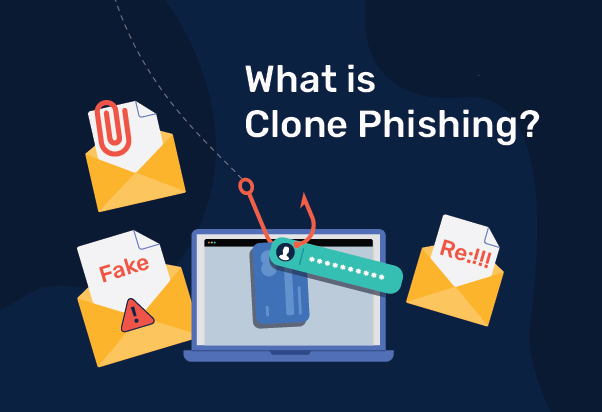
Clone phishing is a sophisticated cyberattack technique in which attackers create a nearly identical copy of a legitimate email that the victim has previously received. The cloned email appears authentic but contains malicious links, attachments, or modified content designed to steal sensitive information or infect systems with malware. Unlike traditional phishing, which often relies on generic messages, clone phishing leverages genuine communications that recipients recognize and trust. This familiarity significantly increases the likelihood that victims will interact with the malicious content. As cybercriminals continue to refine their tactics, clone phishing has become one of the most effective forms of social engineering used against individuals and organizations.
How Does It Work?
A clone phishing attack typically follows a structured process:
1. Obtain a Legitimate Email
Attackers first gain access to or intercept a legitimate email. This may occur through:
- Email account compromise
- Data breaches
- Previous phishing attacks
- Insider threats
- Publicly available communications
2. Create an Exact Copy
The cybercriminal duplicates the original email, preserving:
- Sender information
- Branding and logos
- Formatting and design
- Subject line
- Message content
The goal is to make the cloned email appear indistinguishable from the original.
3. Replace Links or Attachments
Attackers modify key elements such as:
- Hyperlinks directing users to fake websites
- Attachments containing malware
- Download buttons leading to malicious files
These changes are often subtle and difficult to detect.
4. Send the Cloned Email
The cloned message is distributed to targeted victims, often using spoofed email addresses that resemble legitimate senders.
5. Capture Data or Deliver Malware
Once victims click the malicious link or open the infected attachment, attackers can:
- Steal login credentials
- Collect financial information
- Install ransomware
- Deploy spyware
- Gain unauthorized network access
Clone Phishing vs Traditional Phishing
| Feature | Clone Phishing | Traditional Phishing |
|---|---|---|
| Uses a real email as a template | Yes | No |
| Highly personalized | Usually | Sometimes |
| Appears familiar to recipients | Yes | Rarely |
| Detection difficulty | High | Moderate |
| Success rate | Generally higher | Lower |
Because clone phishing exploits trust established through legitimate communication, it is often more convincing than standard phishing attempts.
Some Common Examples
Fake Invoice Update
A company receives a legitimate invoice from a vendor. Attackers clone the email and resend it with an updated attachment containing malware.
Result:
Employees open the attachment, leading to a system infection.
Password Reset Clone
Cybercriminals copy an authentic password reset email from a popular service and replace the legitimate reset link with a fraudulent login page.
Result:
Victims unknowingly provide their credentials to attackers.
Business Communication Clone
A cloned email appears to come from a manager requesting review of an attached document.
Result:
The attachment installs ransomware or credential-stealing malware.
Cloud Storage Notification
Attackers duplicate notifications from cloud platforms and replace document-sharing links with malicious URLs.
Result:
Victims enter credentials into fake cloud service login pages.
Why Clone Phishing Is So Effective
Several factors contribute to the success of clone phishing attacks:
- Trust Exploitation – Recipients recognize the message format and sender, making them less suspicious.
- Familiar Content – The email references a communication the victim may have already seen.
- Professional Appearance – Since the email is copied from a legitimate source, it often lacks the grammatical errors commonly found in phishing attempts.
- Urgency and Context – Attackers frequently use realistic business scenarios that encourage quick action.
Risks Associated with Clone Phishing
Successful clone phishing attacks can lead to serious consequences.
- Identity Theft – Attackers may collect personal information for fraudulent activities.
- Financial Loss – Organizations may suffer direct financial theft through compromised accounts.
- Data Breaches – Sensitive customer or corporate information can be exposed.
- Malware Infections – Malicious attachments can install: ransomware, trojans, keyloggers, spyware,…
- Business Disruption – Compromised systems may result in downtime, lost productivity, and reputational damage.
How to Prevent Clone Phishing Attacks
Verify Unexpected Emails
If an email requests urgent action or contains updated attachments, verify it through another communication channel.
Inspect URLs Carefully
Always check destination URLs before clicking.
Look for:
- HTTPS encryption
- Correct domain spelling
- Legitimate company domains
Enable Multi-Factor Authentication (MFA)
Even if credentials are stolen, MFA adds an additional security layer.
Use Email Security Solutions
Modern email security tools can detect:
- Spoofed domains
- Malicious attachments
- Suspicious links
- Impersonation attempts
Train Employees Regularly
Security awareness training helps users recognize phishing tactics and avoid common mistakes.
Keep Software Updated
Regular updates reduce vulnerabilities that malware may exploit after a successful attack.
Implement Email Authentication Protocols
Organizations should deploy:
- SPF (Sender Policy Framework)
- DKIM (DomainKeys Identified Mail)
- DMARC (Domain-based Message Authentication, Reporting & Conformance)
These protocols help verify legitimate email senders and reduce spoofing risks.
Best Practices for Organizations
To strengthen defenses against clone phishing, organizations should:
- Conduct regular phishing simulations.
- Monitor email traffic for anomalies.
- Implement zero-trust security principles.
- Restrict administrative privileges.
- Maintain reliable backups.
- Establish incident response procedures.
- Use endpoint detection and response (EDR) solutions.
Combining technical controls with employee awareness provides the strongest protection.
What to Do If You Fall Victim to Clone Phishing
If you suspect you have interacted with a clone phishing email:
Immediately:
- Disconnect affected devices from the network.
- Change compromised passwords.
- Enable MFA if not already active.
- Report the incident to IT or security teams.
- Run antivirus and malware scans.
For Organizations:
- Investigate affected accounts.
- Review access logs.
- Notify impacted stakeholders.
- Follow incident response protocols.
- Assess potential data exposure.
Quick action can significantly reduce the impact of an attack.
Future Trends in Clone Phishing
As artificial intelligence and automation technologies advance, clone phishing attacks are becoming increasingly sophisticated. Attackers can now generate highly personalized messages, mimic writing styles, and automate large-scale campaigns. Organizations are responding by adopting AI-powered email security platforms capable of detecting subtle indicators of phishing and impersonation. The ongoing battle between attackers and defenders highlights the importance of continuous vigilance and cybersecurity education.
Conclusion
Clone phishing is a highly deceptive cyberattack that exploits trust by replicating legitimate emails and replacing links or attachments with malicious content. Because these messages closely resemble authentic communications, they can be difficult to identify and highly effective against both individuals and businesses.
By understanding how clone phishing works, recognizing warning signs, implementing strong security controls, and maintaining cybersecurity awareness, users can significantly reduce the risk of becoming victims. In today’s evolving threat landscape, vigilance remains one of the most effective defenses against clone phishing attacks.