Ultra-Dense Network: How It Powers High-Capacity 5G Connectivity
An ultra-dense network (UDN) is a wireless network architecture that deploys many closely spaced access points or small cells in a limited area. Its purpose is simple: give more people, devices, and applications reliable high-speed connectivity where demand is highest. As mobile data use, IoT adoption, cloud applications, and real-time services grow, traditional macrocell networks alone can struggle in busy locations. Stadiums, shopping centres, airports, city centres, factories, and office buildings may need far more capacity than a single large cell can provide. Ultra-dense networking addresses this challenge by bringing the network closer to users.
What Is an Ultra-Dense Network?
An ultra-dense network is a highly concentrated deployment of wireless nodes, usually small cells, that work alongside macrocell sites. Instead of relying only on large towers that cover broad areas, a UDN adds many smaller radio access points to improve capacity, coverage, and user experience in traffic-heavy locations.
In a 5G ultra-dense network, each small cell serves a smaller physical area. This allows operators to reuse radio spectrum more efficiently, reduce the number of devices competing for one connection, and deliver stronger performance indoors and in urban hotspots.
The approach is especially important for higher-frequency 5G spectrum, including millimetre-wave bands, which can offer substantial capacity but generally cover shorter distances. The ITU notes that some millimetre-wave base stations may cover only around 20 to 40 metres, making denser deployments necessary for consistent coverage.
How Does an Ultra-Dense Network Work?
Ultra-dense networking combines several technologies to deliver reliable wireless service at scale:
- Small cells: Low-power base stations placed on street furniture, walls, ceilings, lamp posts, or inside buildings.
- Macrocells: Larger cellular sites that provide broad-area coverage and support mobility.
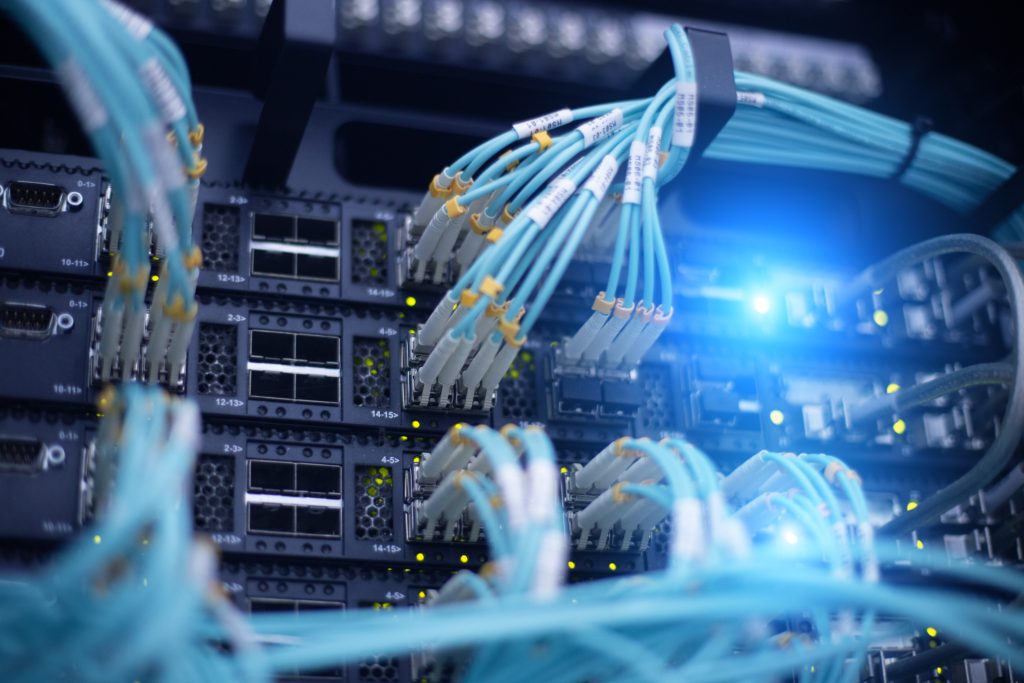
- High-capacity backhaul: Fibre, microwave, or other transport links that connect small cells to the core network.
- Edge computing: Local processing that reduces the distance data must travel for latency-sensitive services.
- Network automation: Software that monitors traffic, adjusts settings, manages interference, and keeps the network operating efficiently.
A user’s device may move between macro and small cells as they travel. This coordination helps maintain a stable connection while matching each user to the most appropriate radio resource.
Some Key Benefits
- Higher Network Capacity – The main benefit of an ultra-dense network is greater capacity. By placing more cells in a given area, operators can serve more simultaneous users and devices without overloading one large base station. This is valuable in crowded settings where users expect smooth video streaming, mobile payments, social media, online gaming, and work applications.
- Faster Data Speeds – Smaller cells place the radio network closer to the user. A shorter distance can improve signal quality and enable faster data rates, particularly when the network uses wide 5G channels or high-frequency spectrum.
- Better Indoor and Hotspot Coverage – Indoor coverage is a persistent challenge for mobile networks because building materials can weaken outdoor signals. Small cells installed inside offices, venues, retail spaces, and transport hubs can close these coverage gaps. Ultra-dense networks also help eliminate “black spots” in dense urban environments where demand or physical obstructions reduce service quality.
- Lower Latency for Real-Time Services – When combined with multi-access edge computing, UDNs can support lower-latency applications by processing data closer to the end user. This matters for cloud gaming, industrial automation, connected vehicles, augmented reality, and other time-sensitive services.
- Improved Spectrum Efficiency – A dense small-cell layout allows spectrum to be reused across a smaller geographic area. With careful planning and interference management, this can increase the amount of data delivered per unit of spectrum.
Ultra-Dense Network Use Cases
Ultra-dense networks are most useful where demand is concentrated, or service quality is business-critical.
- Smart Cities – Cities can install small cells to improve mobile coverage on busy streets, transport corridors, public squares, and commercial districts. These networks may also support smart lighting, traffic monitoring, public safety systems, and connected sensors.
- Stadiums and Event Venues – Thousands of people may attempt to upload photos, stream video, make payments, and use social apps at the same time. A 5G ultra-dense network distributes that traffic across many cells to reduce congestion.
- Enterprises and Campuses – Offices, warehouses, universities, and hospitals often need dependable indoor wireless coverage. Dense networks can support employees, guests, private 5G devices, and IoT systems in the same environment.
- Industrial Sites – Factories and logistics facilities use connected machines, sensors, automated guided vehicles, and video analytics. Ultra-dense private 5G networks can provide the capacity and coverage needed for these operations.
- Transport Hubs – Airports, railway stations, metro systems, and bus terminals combine large crowds with difficult indoor coverage conditions. A dense cell design can improve connectivity in terminals, platforms, tunnels, and adjacent outdoor areas.
Challenges of Deploying an Ultra-Dense Network
Despite its advantages, an ultra-dense network requires careful planning.
- Interference Management – More cells can create more interference if they are not coordinated properly. Operators use techniques such as beamforming, dynamic resource allocation, power control, and coordinated scheduling to minimise this risk.
- Backhaul Availability – Every small cell needs a dependable connection to the broader network. Fibre is often the preferred option because it delivers high capacity and low latency, but it can be expensive or slow to deploy in some locations.
- Site Acquisition and Power – Finding suitable places for many small cells can be difficult. Operators must secure permissions, power supplies, mounting locations, and maintenance access. Dense deployments can also increase energy and operational demands.
- Mobility and Handover Complexity – When users move through areas with many small cells, the network must manage frequent handovers without dropping connections. Intelligent automation and strong macrocell coverage are important for a seamless experience.
- Security – A larger number of distributed network nodes expands the attack surface. Security should cover physical equipment, access control, software updates, backhaul links, and device authentication.
Ultra-Dense Networks and 5G
Ultra-dense networking is a core strategy for delivering 5G capacity in high-demand areas. It complements other 5G technologies, including massive MIMO, beamforming, network slicing, cloud-native core networks, and edge computing.
The most effective deployments usually use a layered approach:
- Low-band spectrum provides broad coverage.
- Mid-band spectrum balances coverage and capacity.
- High-band spectrum and small cells deliver deep capacity in the busiest areas.
This combination lets operators improve service without attempting to use one type of cell or spectrum band for every scenario.
The Future of Ultra-Dense Networking
As 5G evolves and 6G research advances, ultra-dense networks will become more intelligent and more automated. Artificial intelligence can help predict traffic patterns, optimise energy use, detect faults, and adjust radio resources in real time. Future UDNs are also likely to integrate more tightly with private wireless networks, edge cloud platforms, Wi-Fi, satellite connectivity, and advanced IoT systems. The goal is not simply to add more cells; it is to create a coordinated network that responds efficiently to local demand.
Conclusion
An ultra-dense network is a practical answer to the growing demand for fast, reliable wireless connectivity. By combining small cells, macro coverage, high-capacity backhaul, edge computing, and intelligent automation, organisations can deliver stronger 5G performance in the places where it matters most. For mobile operators, enterprises, and smart-city planners, ultra-dense networking is not just about adding infrastructure. It is about building a scalable, flexible network that can support today’s connected experiences and tomorrow’s data-intensive services.