Long Polling Explained: How It Works, Benefits, and Use Cases
Modern web applications increasingly rely on real-time communication. Whether you’re building a chat application, stock trading platform, notification system, or live dashboard, users expect information to update instantly without refreshing the page. One of the earliest techniques used to achieve this is long polling. Although newer technologies like WebSockets and Server-Sent Events (SSE) have become popular, long polling remains a reliable solution, especially when compatibility and simplicity are important.
This guide explains how long polling works, its advantages, limitations, implementation methods, and when you should use it.
What Is Long Polling?
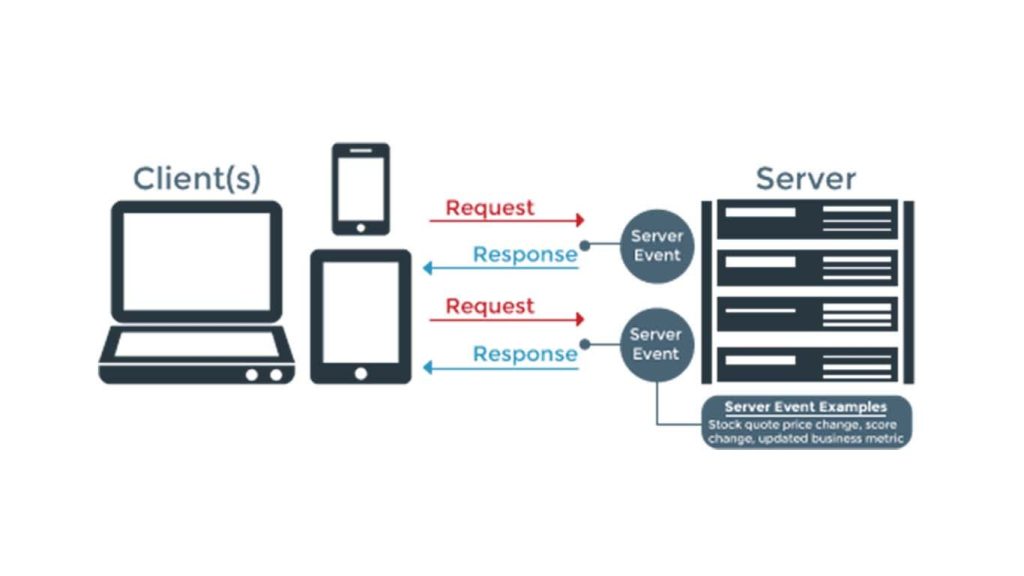
Long polling is a web communication technique where a client sends an HTTP request to the server, and instead of responding immediately, the server keeps the connection open until new data becomes available or a timeout occurs. Once the server sends a response, the client immediately creates another request, maintaining an almost continuous connection.
Unlike traditional polling, which repeatedly checks for updates at fixed intervals, long polling waits until there is actual data to send. This significantly reduces unnecessary network traffic while providing near real-time communication.
How Long Polling Works
The communication process follows these steps:
- A client sends an HTTP request.
- The server checks whether new information exists.
- If no new data is available, the server holds the request open.
- Once new information arrives, the server immediately responds.
- The client processes the response.
- The client instantly sends another long-polling request.
This continuous cycle creates the appearance of a persistent connection while still using standard HTTP.
Long Polling Architecture
Client                         Server
   |                              |
   |------ HTTP Request --------->|
   |                              |
   |      Wait for new data       |
   |                              |
   |<------ Data Response --------|
   |                              |
   |------ New Request ---------->|
   |                              |
Unlike traditional HTTP communication, the connection stays open until data becomes available.
Traditional Polling vs Long Polling
Traditional Polling
With regular polling:
- Client requests every few seconds.
- Server responds immediately.
- Most responses may contain no new data.
- Generates unnecessary traffic.
Example:
Every 5 seconds
Client ---> Server
Server ---> No Updates
Long Polling
With long polling:
- Client sends one request.
- Server waits until data changes.
- Response contains meaningful information.
- Client reconnects immediately.
Result:
- Lower bandwidth consumption
- Faster updates
- Fewer unnecessary requests
Advantages of Long Polling
Near Real-Time Updates
Users receive information shortly after it becomes available.
Examples include:
- Chat messages
- Notifications
- Live alerts
- Ticket updates
Easy Implementation
Since long polling relies on standard HTTP requests, developers can implement it without introducing entirely new protocols. Most web frameworks already support long polling.
Excellent Compatibility
Long polling works with:
- HTTP/1.1
- Corporate firewalls
- Reverse proxies
- Older browsers
- Load balancers
This makes it useful where WebSockets may be restricted.
Reduced Network Traffic
Traditional polling sends requests continuously regardless of whether updates exist. Long polling sends responses only when necessary.
No Special Infrastructure Required
Most web servers already support HTTP long polling without requiring specialized gateways.
Disadvantages of Long Polling
High Server Resource Usage
Each waiting request consumes:
- Memory
- File descriptors
- Worker threads (depending on implementation)
Thousands of concurrent users can significantly increase server load.
Frequent Connection Recreation
Unlike WebSockets, every response requires a new HTTP request.
This introduces:
- Additional latency
- TCP overhead
- Extra HTTP headers
Scalability Challenges
Large-scale applications serving millions of users often find long polling less efficient than WebSockets.
Timeout Management
Servers must carefully configure:
- Request timeout
- Client retry interval
- Load balancer timeout
- Reverse proxy timeout
Improper settings may cause disconnects.
Common Use Cases
Long polling remains useful in many real-world applications.
Chat Applications
Users receive messages immediately after they are sent.
Examples:
- Customer support chat
- Internal messaging
- Live communication tools
Notification Systems
Applications notify users instantly about:
- Account activity
- Security alerts
- Payment confirmations
- Friend requests
Live Dashboards
Monitoring dashboards display:
- CPU utilization
- Network traffic
- System health
- Business metrics
Multiplayer Games
Simple online games use long polling to synchronize:
- Player moves
- Match events
- Game status
Job Processing
Background jobs notify clients when:
- Reports finish generating
- Video rendering completes
- File uploads finish
- Machine learning tasks complete
Security Considerations
Secure long-polling implementations should include:
- HTTPS encryption
- Authentication tokens (JWT or OAuth)
- Rate limiting
- CSRF protection (where applicable)
- Request validation
- Proper timeout handling
Monitoring abnormal request rates also helps mitigate denial-of-service (DoS) risks.
Performance Optimization Tips
Improve scalability by:
- Using asynchronous/non-blocking servers
- Minimizing payload size
- Implementing connection pooling
- Leveraging caching where appropriate
- Optimizing database queries
- Using message brokers such as Redis Pub/Sub or Apache Kafka for event delivery
When Should You Use Long Polling?
Long polling is a good choice when:
- WebSockets are unavailable or blocked.
- You need broad compatibility across browsers and networks.
- Real-time updates are required, but traffic volume is moderate.
- Simplicity is preferred over maintaining persistent connections.
- Existing infrastructure is HTTP-based.
For applications with extremely high concurrency or intensive bidirectional communication, WebSockets are generally a more efficient solution.
Conclusion
Long polling is a proven technique for delivering near real-time updates over standard HTTP. By keeping requests open until new data is available, it minimizes unnecessary network traffic compared to traditional polling while remaining simple to implement and widely compatible. Although modern technologies like WebSockets and Server-Sent Events often provide greater efficiency for high-scale or bidirectional communication, long polling continues to be a practical choice for many notification systems, chat applications, monitoring dashboards, and legacy environments. Choosing the right approach depends on your application’s scalability, latency requirements, and infrastructure constraints.